





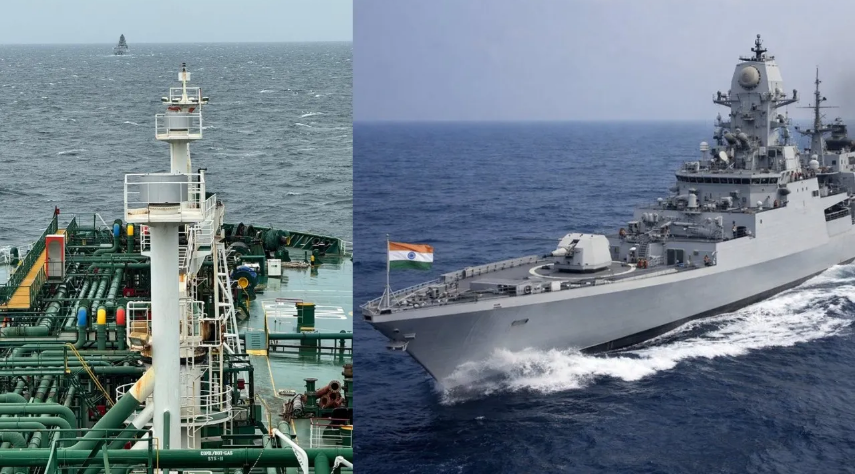
The escalating conflict in West Asia is triggering global concern, particularly due to growing instability around the Strait of Hormuz, a key route for international trade. The situation has emerged as a serious challenge to India’s energy security, given its heavy dependence on crude imports through the region. In response, India has launched a strategic naval mission, Operation Urja Suraksha, to safeguard its energy supply lines.
The operation is aimed at ensuring the uninterrupted movement of critical fuel shipments, including crude oil, LNG, and LPG, to Indian ports. As part of this initiative, the Indian Navy has deployed more than five frontline warships, including destroyers and frigates, to patrol key maritime routes and provide security cover to Indian merchant vessels transiting through the high-risk zone.
STORY | India among 5 nations granted passage through Strait of Hormuz by Tehran
Iran allowed India and a number of other "friendly nations", including China and Russia, to use the Strait of Hormuz for commercial shipping, Iranian Foreign Minister Seyed Abbas Araghchi has said.… pic.twitter.com/eO3WBfGpLH
— Press Trust of India (@PTI_News) March 26, 2026
The Strait of Hormuz, which falls under Iran’s strategic influence, has witnessed heightened tensions in recent weeks, leaving nearly 20 cargo vessels stranded in the region. To address this, the Indian Navy has established a multi-layered security mechanism to escort and safely guide these ships through the vulnerable stretch, even amid volatile conditions.
Indian naval ships stationed in the Gulf of Oman are acting as a protective shield, escorting vessels exiting the strait and directing them safely toward the Arabian Sea. The Navy is also maintaining continuous communication with Indian ships after they clear Iranian waters, ensuring real-time coordination and response to any emerging threats.
The operation has already recorded significant success, with two major LPG carriers, Pine Gas and Jag Vasant, successfully navigating the خطر-prone zone under naval protection. Together carrying around 92,000 tonnes of LPG, these vessels are expected to reach Indian ports shortly, providing a boost to fuel supply stability as India continues to strengthen its maritime security framework.