





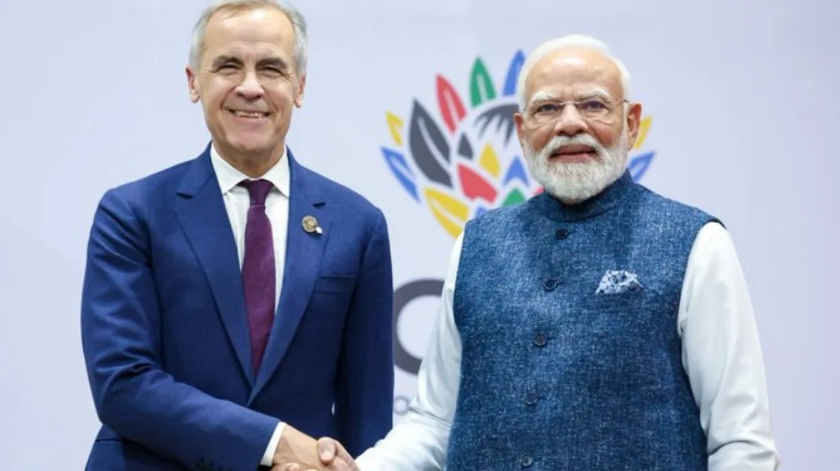
Diplomatic ties between India and Canada have remained strained since the killing of Khalistani separatist Hardeep Singh Nijjar, with Ottawa alleging India’s involvement in the incident. The allegations, strongly denied by New Delhi, led to escalating tensions during the tenure of former Canadian Prime Minister Justin Trudeau. In an effort to restore relations, Canada’s new Prime Minister Mark Carney is scheduled to visit India on February 26, 2026, with the objective of resetting bilateral engagement.
Carney is expected to focus on rebuilding economic and strategic cooperation while diversifying Canada’s trade partnerships beyond excessive reliance on the United States. A key agenda item during the visit will be the revival of negotiations on the Comprehensive Economic Partnership Agreement (CEPA), a proposed free trade pact that had previously stalled. Both countries have set an ambitious target of increasing bilateral trade to $70 billion by 2030, and Carney is likely to begin his tour in Mumbai with meetings involving top business leaders.
Canadian PM Mark Carney is set to visit India from February 26 to March 7, 2026, marking a major reset in the relationship between the two nations. 🇮🇳🤝🇨🇦
🔗 Full story:https://t.co/2pNqK6iLdm pic.twitter.com/0obfrwhrDo— All India Radio News (@airnewsalerts) February 24, 2026
Energy cooperation is also anticipated to feature prominently in discussions. A new 10-year uranium supply agreement to support India’s nuclear energy requirements is reportedly under consideration. In addition, the two sides are expected to explore collaboration in clean energy sectors such as green hydrogen. Emerging technology partnerships, particularly in artificial intelligence, semiconductor manufacturing, and digital infrastructure, are also likely to be part of the talks.
On the strategic front, both nations are expected to deliberate on strengthening counter-terrorism cooperation, including monitoring pro-Khalistan elements. Discussions may also extend to security collaboration in the Indo-Pacific region. Furthermore, easing visa processes for Indian students and skilled professionals to enhance talent mobility and people-to-people exchanges is likely to be addressed as part of the broader effort to stabilize and strengthen bilateral ties.