



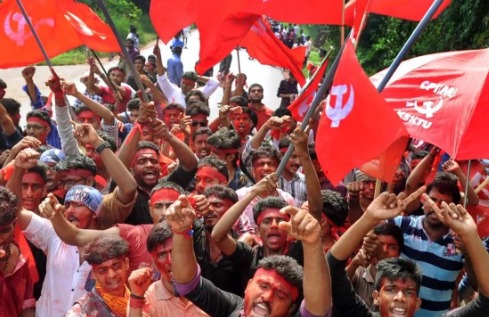
The trajectory of Left politics in India has reached a critical juncture, with the once-dominant Communist movement now struggling to maintain its relevance across the country. After losing long-held strongholds such as West Bengal and Tripura, Kerala has emerged as the last major bastion for the Left Democratic Front (LDF), but current election trends indicate that even this remaining foothold is under serious threat.
In West Bengal, the Left Front ruled for 34 consecutive years before being defeated by Mamata Banerjee in 2011, after which it failed to regain its earlier influence, while in Tripura, 25 years of Communist rule ended in 2018 with the rise of the Bharatiya Janata Party (BJP), further shrinking its national footprint. Over time, the Left’s presence in national politics has been reduced to limited pockets, with declining representation in Parliament reflecting its weakening organisational strength.
In Kerala, where power traditionally alternates between the Left Democratic Front (LDF) and the United Democratic Front (UDF), Chief Minister Pinarayi Vijayan broke the pattern in 2021 by securing a consecutive term. However, the latest election trends show the UDF leading in 95–100 seats, while the LDF is confined to 40–45 seats, indicating a significant shift in voter sentiment driven by anti-incumbency and governance-related criticisms.
If these trends translate into final results, the Left could face an unprecedented political setback, potentially reducing it to a marginal force at the national level. Analysts suggest that without organisational revival and ideological recalibration, the red ideology may struggle to survive in the evolving political landscape dominated by regional parties and the expanding influence of the BJP.