





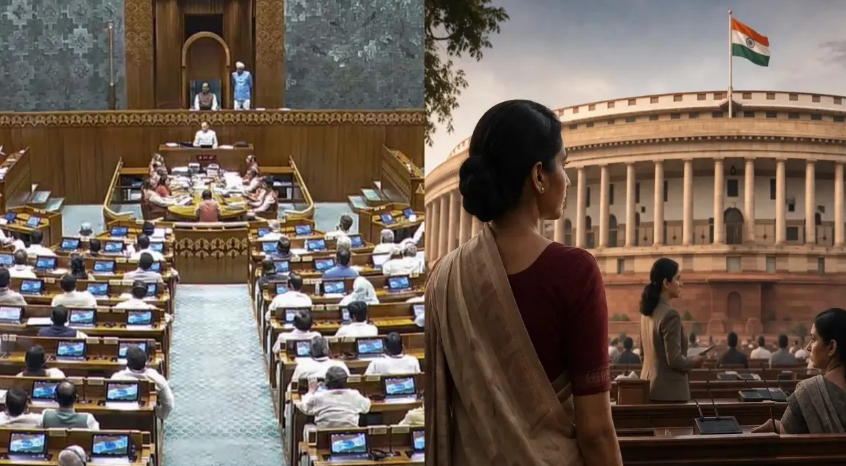
The 131st Constitutional Amendment Bill was defeated in the Lok Sabha after the Centre failed to secure the required two-thirds majority. Out of 528 Members of Parliament who participated in the voting, 298 supported the bill while 230 opposed it, falling short of the minimum 352 votes needed for passage. The failure of the bill has stalled the proposed implementation of 33 percent reservation for women in legislative bodies. Following the outcome, the government also withdrew the Delimitation Bill and the Union Territories Amendment Bill, leading to all three legislations failing to pass.
The outcome triggered sharp political reactions, with opposition parties welcoming the development while the ruling NDA criticized them for allegedly blocking women’s empowerment. The government had linked women’s reservation with delimitation, but could not secure enough support. Concerns were also raised, particularly by southern states, that delimitation could lead to a reduction in their parliamentary representation—an issue that, for now, has been averted with the bill’s defeat.
Experts suggest that the Centre may have moved ahead without adequate consensus-building with opposition parties. Constitutional amendments require broad political backing, and analysts believe the absence of all-party consultations and failure to incorporate opposition suggestions contributed to the bill’s rejection. The move is seen as having unified the opposition against the proposal.
Another key criticism was the linking of women’s reservation with delimitation, which allowed opposition parties to question the government’s intent. The lack of a specific quota for OBC women further fueled criticism, particularly from the Congress, which argued that the bill did not fully address inclusive empowerment. With the bill’s defeat, attention now turns to whether the Centre will introduce a revised proposal—either by decoupling women’s reservation from delimitation or by offering firm assurances to address regional concerns.