





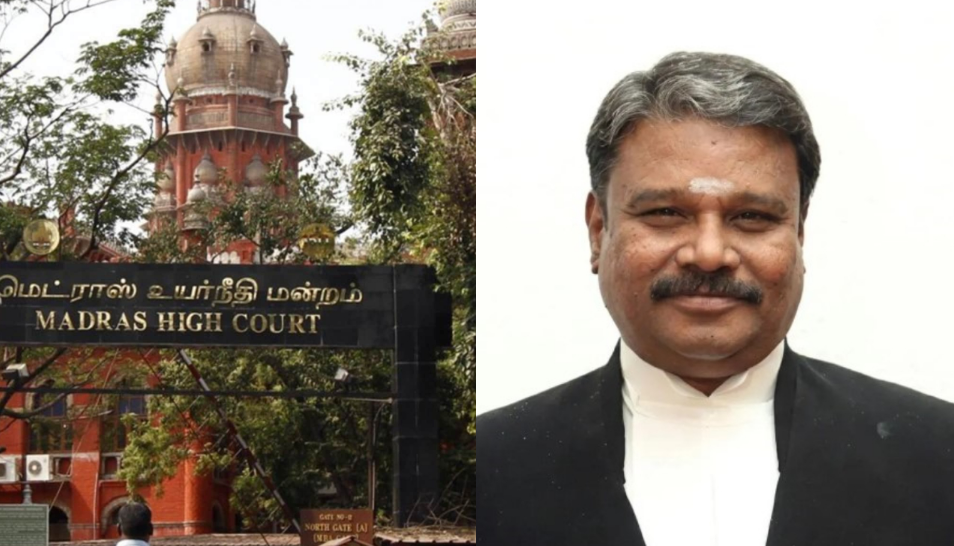
CHENNAI: In a significant judicial development, the Madras High Court has ruled that individuals working under the Mahatma Gandhi National Rural Employment Guarantee Act (MGNREGA) cannot claim a legal right to the regularization of their services, regardless of the duration of their employment. Justice B. Pugalendhi delivered the verdict while dismissing a petition from a worker who had served as a scavenger at a rural veterinary clinic for nine years and sought permanent absorption into the government workforce.
The court underscored that public appointments must strictly adhere to the constitutional mandate of equal opportunity under Article 14, requiring a formal, systematic recruitment process. It clarified that there is a fundamental legal distinction between temporary engagements under social welfare schemes and permanent public service appointments. The ruling emphasized that long-term tenure in a temporary role does not, by itself, create an entitlement to permanent status, as the initial entry into the position did not follow standard recruitment protocols.
Observing the evolving nature of rural administration, the court noted that the MGNREGA, launched in 2006 to provide unskilled manual labor, was conceived for an era when tasks like desilting and land development were purely manual. With the advent of modern mechanization, the court highlighted that many such tasks are now completed more efficiently by machines. The court questioned the continued reliance on welfare scheme workers for recurring administrative or maintenance tasks in institutions like veterinary clinics, suggesting that such practices might indicate an institutional need for regular staff rather than a genuine exercise of a welfare mandate.
In a proactive suggestion to policymakers, the High Court advised a comprehensive review of how rural human resources are utilized. Addressing the acute labor shortage in the agricultural sector, Justice Pugalendhi proposed that the government explore a framework to redirect MGNREGA workers toward productive agricultural activities. The court suggested a “wage-sharing” model where the financial burden could be divided between the government and farmers.
This model, the court argued, could simultaneously address the labor scarcity faced by the farming community and reduce the fiscal burden on the state, while providing steady income for rural laborers. The court concluded by urging the state to modernize its approach, stating that while the operational aspects and safeguards remain in the domain of the government, there is a compelling need for a policy-level shift that balances technological integration with the productive use of human resources for the benefit of the broader rural economy.