





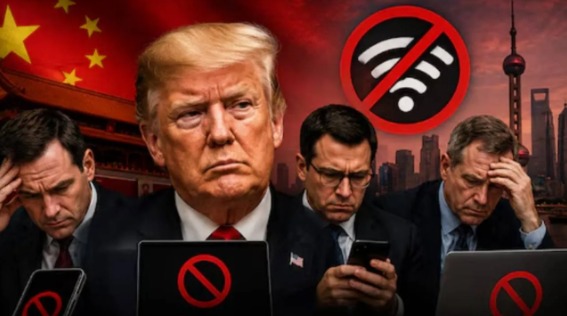
Tight digital security measures and heightened geopolitical sensitivities have reportedly defined the atmosphere during former US President Donald Trump’s visit to China, reflecting deep-rooted concerns over cyber espionage and data protection between the two global powers. The situation has drawn comparisons to a high-tension cinematic scenario, where appearances of diplomatic cordiality mask underlying mistrust.
Although official engagements between US and Chinese representatives have featured routine handshakes and formal exchanges, sources indicate that US officials remain on high alert regarding potential cyber intrusions. The level of precaution being exercised reportedly reflects longstanding concerns in Washington over data security risks during high-level interactions with Beijing.
As part of these measures, US officials are said to have left behind personal electronic devices such as smartphones, laptops, and tablets before entering China. Instead, they are relying on restricted-use devices equipped only with essential functions, with strict instructions to avoid cloud-based services, personal messaging platforms, and stored contact data throughout the visit.
Security protocols have also extended to basic operational habits, with officials reportedly advised against using public charging ports due to risks such as “juice jacking,” where data can be compromised through USB connections. To mitigate such risks, only pre-approved chargers and power banks are being used, while all external electronic accessories are being carefully vetted.
Sensitive discussions during the visit are being conducted inside SCIF (Sensitive Compartmented Information Facility) rooms, designed to block any form of electronic surveillance. The stringent security framework reportedly applies not only to government officials but also to accompanying business leaders from major corporations such as Apple, Boeing, and BlackRock, underscoring the scale of cybersecurity concerns amid ongoing US-China strategic competition.