





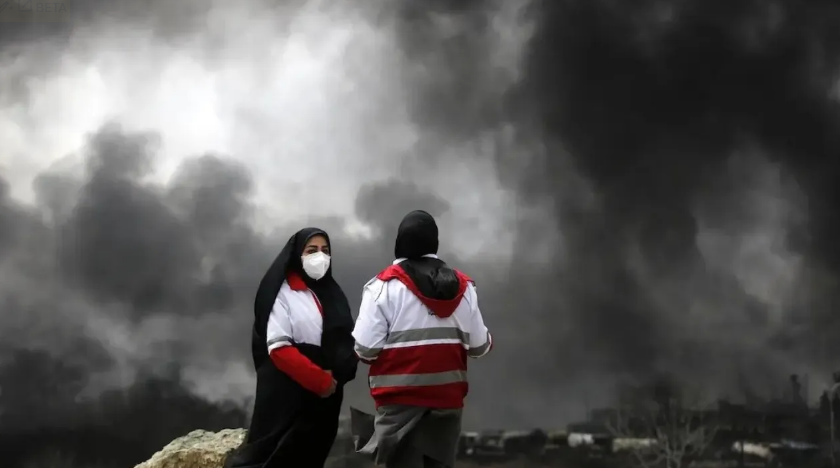
The United States and Israel reportedly launched a joint military offensive against Iran on February 28, followed by intensified airstrikes on March 7 targeting oil storage facilities and refineries. The attacks, which struck key locations including Tehran and Karaj, have resulted in extensive infrastructure damage and triggered a severe environmental crisis across affected regions.
The burning of large oil reserves released significant quantities of soot and microscopic oil particles into the atmosphere. Environmental scientists explain that when these pollutants mix with cloud moisture, they descend as “black rain,” carrying toxic chemicals back to the ground. Tehran’s metropolitan region, home to nearly 15 million people, is now witnessing critically deteriorating air quality, with PM2.5 levels reportedly four times higher than WHO safety standards, along with elevated concentrations of sulfur dioxide and nitrogen oxides.
Health authorities have reported a sharp rise in respiratory ailments among residents, including persistent coughing, breathing difficulties, eye and skin irritation, and asthma-related complications. Doctors have warned that prolonged exposure to such toxic conditions could significantly increase the risk of cardiovascular and chronic lung diseases, while damaged infrastructure has further worsened living conditions in the affected areas.
Environmental experts have cautioned that the impact of the “black rain” may extend well beyond immediate health concerns, posing long-term risks to agriculture, soil quality, and structural stability of buildings. Citing historical parallels such as the 1990–91 Kuwait oil fires, specialists note that similar incidents previously led to widespread respiratory diseases, with recent studies indicating a threefold increase in the risk of severe lung damage following exposure to oil-based air pollution.