





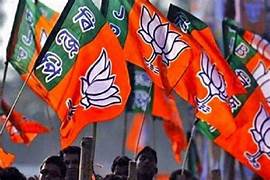
The Bharatiya Janata Party (BJP) is recalibrating its political strategy as it gears up for upcoming electoral challenges across the country. With the conclusion of elections in five states, the party’s top leadership has shifted its focus toward strengthening its presence in both southern and key northern regions. Expanding its footprint in states such as Karnataka, Punjab, and Telangana is being seen as critical to achieving its long-term objective for the 2029 general elections. Over the next two years, with polls expected in nearly 16 states, the BJP aims to retain power in its strongholds while making inroads into new territories.
However, the evolving political landscape in Punjab and Karnataka has posed fresh challenges for the party. In Punjab, the BJP is reportedly making efforts to weaken the Aam Aadmi Party (AAP) by attempting to attract its elected representatives. Meanwhile, in Karnataka, internal assessments suggest that local strategies have not yielded the desired results against the ruling Indian National Congress. Amid these concerns, Telangana has emerged as a key focus area, with the party leadership placing high expectations on its prospects in the state.
Political observers believe that Narendra Modi’s scheduled visit to Telangana on the 10th of this month could serve both developmental and political purposes. Beyond inaugurating projects, the visit is expected to feature significant announcements aimed at energizing the party cadre and strengthening its electoral positioning in the state. The BJP leadership is keen on leveraging such high-profile engagements to build momentum ahead of upcoming elections.
At the national level, discussions around a possible Union Cabinet reshuffle have intensified in New Delhi. Sources indicate that the Prime Minister may drop underperforming ministers and assign them organizational roles within the party, while inducting new faces to improve governance perception and electoral readiness. The reshuffle is also expected to strategically empower leaders from poll-bound states such as Telangana, Karnataka, and Punjab, alongside established strongholds like Uttar Pradesh and Gujarat.
Looking ahead, the BJP’s roadmap involves retaining power in crucial states like Uttar Pradesh and Gujarat in 2026, while rebuilding strength in Madhya Pradesh and Rajasthan by 2028. At the same time, the party is targeting electoral breakthroughs in states such as Telangana and Meghalaya. Balancing regional dynamics with its development narrative, while strengthening the organization at the grassroots level, appears to be the immediate priority for the Modi–Shah leadership as it prepares for the next phase of India’s electoral cycle.