





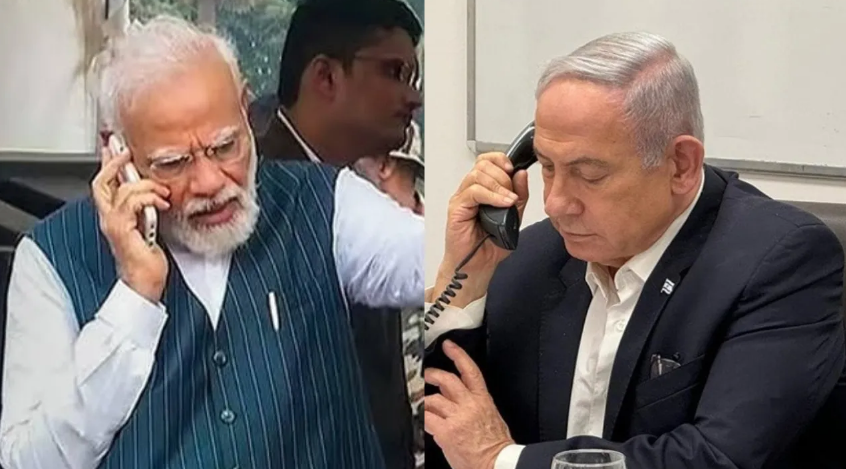
Tensions in the Middle East remain high following the death of Iran’s Supreme Leader Ayatollah Ali Khamenei, with Prime Minister Narendra Modi holding a telephonic conversation with Israeli Prime Minister Benjamin Netanyahu to discuss the escalating situation. Expressing concern over the ongoing attacks, Modi urged de-escalation and emphasized that the safety of civilians must be treated as a priority. In a post on X, he reiterated India’s call for an immediate end to hostilities and a return to peace.
The Prime Minister also condemned Iran’s reported attacks on the UAE, conveyed condolences to the victims, and assured India’s solidarity with the Gulf nation. He separately spoke with UAE President Mohamed bin Zayed Al Nahyan, expressing support and reaffirming India’s commitment to regional stability amid the crisis.
Had a telephone call with PM Benjamin Netanyahu to discuss the current regional situation. Conveyed India's concerns over recent developments and emphasised the safety of civilians as a priority. India reiterates the need for an early cessation of hostilities.@netanyahu
— Narendra Modi (@narendramodi) March 1, 2026
On Sunday night, the Cabinet Committee on Security (CCS), chaired by Modi, convened to review the evolving developments in West Asia. The meeting, attended by senior ministers including Rajnath Singh, Amit Shah, and S. Jaishankar, assessed the potential impact on India, particularly in light of Iran’s reported move to close the Strait of Hormuz. Discussions also focused on contingency measures should the conflict intensify further.
With around 10,000 Indians in Iran, more than 40,000 in Israel, and nearly nine million across West Asia and Gulf nations, concerns over the safety of Indian nationals have increased. Indian embassies in the region have issued advisories urging citizens to remain vigilant and avoid unnecessary travel, as the government closely monitors the rapidly evolving security situation.