





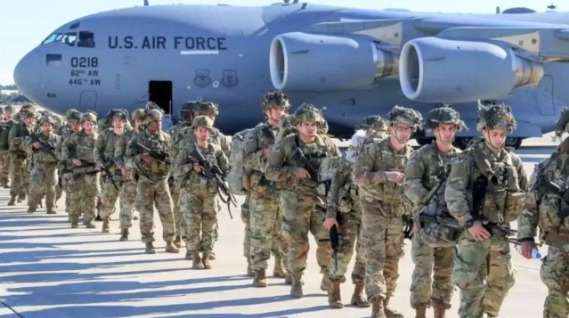
U.S. President Donald Trump has ordered the withdrawal of around 5,000 American troops from Germany, marking a major shift in Washington’s military posture in Europe, with the decision reportedly driven by dissatisfaction over what the administration views as inadequate support from NATO allies, including Germany, on the ongoing Iran conflict and broader Middle East security challenges.
The move is also linked to escalating diplomatic tensions between Trump and German Chancellor Friedrich Merz, who has publicly criticised the U.S. approach toward Iran and questioned its strategic clarity, remarks that have further strained bilateral relations and contributed to Washington’s decision to reassess its military commitments in Germany.
According to Pentagon estimates, the United States currently maintains over 36,000 active troops in Germany, and the planned reduction would see approximately 5,000 personnel withdrawn over the next 6 to 12 months, with redeployment options including relocation to the United States or strategic repositioning in regions such as the Indo-Pacific.
While key installations such as the Ramstein Air Base and the Landstuhl Regional Medical Center are expected to continue operations without disruption, defence analysts warn that the troop reduction could affect NATO’s readiness and strategic balance in Europe, particularly at a time of heightened tensions involving Russia and Ukraine.
The announcement has sparked concern among European allies, with Trump reiterating his “America First” policy and insisting that NATO partners must increase defence spending, while also signalling that further troop cuts could follow if Germany does not comply, underscoring a broader recalibration of U.S.-Europe security relations.