





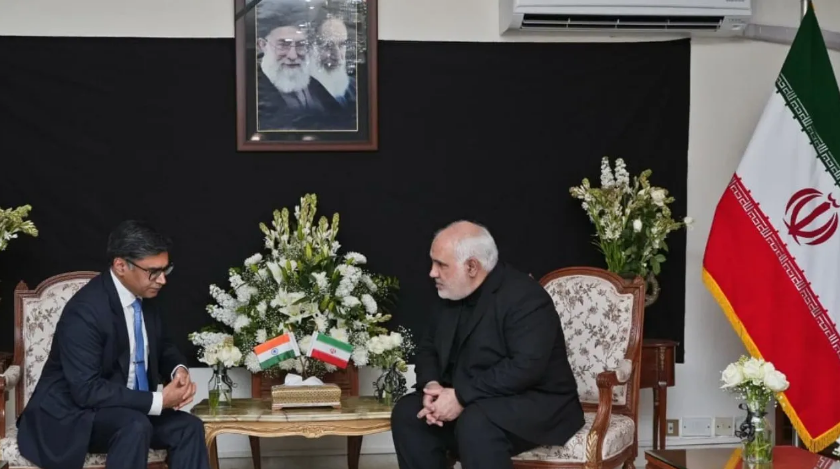
The assassination of Iran’s Supreme Leader Ayatollah Ali Khamenei has ignited a political stir in India. Although Iran officially confirmed his death following an Israeli strike on February 28, the Indian government faced criticism from opposition parties for its delayed response. Congress leader Sonia Gandhi was particularly vocal, pressing the central government to break its silence and officially convey condolences.
Six days after Khamenei’s death, India’s Foreign Secretary Vikram Misri visited the Iranian diplomatic mission in New Delhi. He signed the condolence book and paid respects on behalf of the Indian government. The Iranian mission lowered its national flag to half-mast to mark the leader’s passing, reflecting the solemnity of the occasion.
#BREAKING: India’s Foreign Secretary Vikram Misri signs the condolence book at the Iran Embassy in New Delhi and conveys condolences on the death of Ali Khamenei on behalf of Government of India. pic.twitter.com/R9J0Jt1z6W
— Aditya Raj Kaul (@AdityaRajKaul) March 5, 2026
Sonia Gandhi sharply criticized the government’s approach, writing in *The Indian Express* that remaining silent on the killing of a global leader undermines international law and sovereignty. She warned that India’s inaction could be interpreted as tacit approval of the assassination and potentially damage the credibility of its foreign policy. While Prime Minister Narendra Modi condemned Iran’s retaliatory strikes, Gandhi questioned why the Indian government had not addressed the events leading to Khamenei’s death.
She further noted that countries like Russia and China had reacted promptly, suggesting that India’s stance was inconsistent with its traditional diplomatic principles. Gandhi called for the issue to be formally debated in the second phase of the budget session in Parliament, highlighting the importance of clarifying India’s position on such sensitive international developments.