





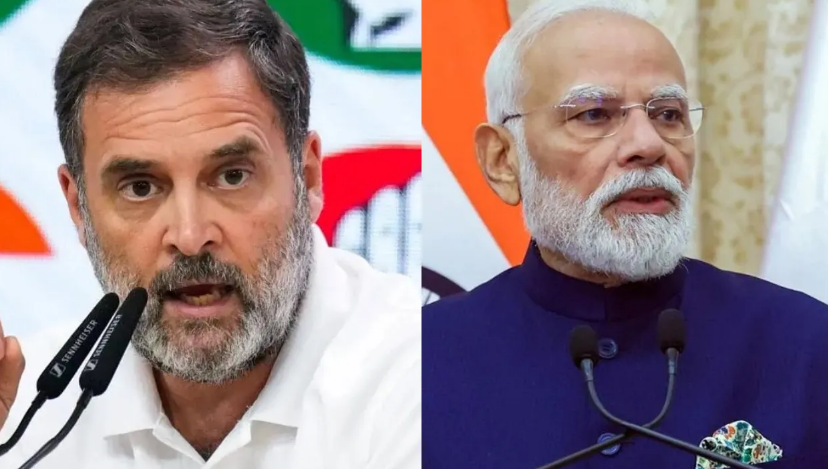
New Delhi: Opposition leader Rahul Gandhi has strongly criticized the recently concluded India-US trade deal, alleging that it prioritizes the interests of a few corporate entities over national welfare. Speaking in Parliament, he accused Prime Minister Narendra Modi of “surrendering before Trump” and effectively “selling India” for the benefit of select industrialists, raising concerns about the deal’s impact on the country’s economy and citizens.
Rahul warned that the import of goods from the US at lower tariffs could severely affect domestic small and medium-sized industries. He said that local businesses may not be able to compete with cheaper imports, potentially leading to closures and a rise in unemployment across the country.
He also highlighted the threat to India’s agricultural sector, particularly dairy and allied industries. Allowing subsidized US dairy products such as milk, cheese, and butter into the Indian market, he argued, would harm cooperatives like Amul and millions of small-scale farmers, making it nearly impossible for them to compete. He added that imports of subsidized poultry and other agricultural products could further jeopardize the livelihoods of millions of Indian farmers.
Rahul raised concerns over data sovereignty, criticizing provisions in the deal that could allow US companies access to Indian digital data. He warned that storing Indian users’ data on foreign servers could pose significant national security risks. He also cautioned that American pharmaceutical pressure could tighten intellectual property norms, reducing the availability of affordable generic medicines in India and increasing healthcare costs for ordinary citizens.
Demanding full transparency, Rahul Gandhi called on the government to disclose all details of the trade deal and facilitate a comprehensive discussion in Parliament. He reiterated that any agreement compromising national interests for the benefit of select corporates would not be accepted and emphasized that the deal primarily benefits US companies and Indian cronies, not the general public.