





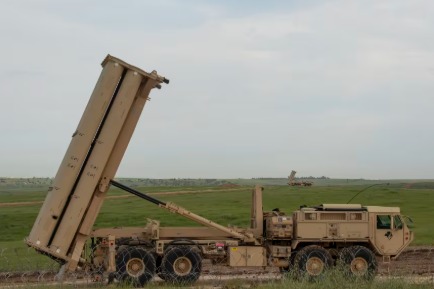
Tensions across West Asia have escalated sharply after US President Donald Trump declared that the ceasefire between the United States and Iran has come to an end, raising concerns that the conflict could intensify in the coming days. According to a report, the renewed hostilities have pushed America’s weapons stockpiles to critically low levels, with interceptor stocks for the THAAD and Patriot missile defense systems already reduced by roughly half.
Analysts warn that if the current trajectory continues, the United States could face a strategic decline reminiscent of Japan and Germany following World War II — nations that held dominant global positions before the war but saw their standing become unstable in its aftermath. The report notes that sustained military operations at the present pace could leave US forces under-resourced for future conflicts, potentially undermining Washington’s ability to respond to major adversaries such as China or North Korea in the Indo-Pacific region.
Retired Marine Colonel Mark Cancian, a defense analyst at the Center for Strategic and International Studies (CSIS), said that if the situation persists over the coming days, America’s strategic exposure in the Indo-Pacific could rise considerably, since the rate of weapons depletion is far outpacing the rate of replenishment. According to CSIS analysis, by the end of the earlier phase of conflict with Iran in April, the US had already expended at least half of its THAAD ballistic missile interceptors, close to half of its Patriot air defense interceptors, and approximately 30 percent of its Tomahawk cruise missile inventory.
While subsequent lower-intensity engagements have somewhat slowed the pace of weapons consumption, the rate of restocking remains sluggish. Experts note that under existing production capacity, the Department of Defense is receiving only around 15 new Tomahawk missiles and 20 Patriot missiles per month, with no new THAAD interceptor deliveries scheduled for 2026. Former Pentagon official Ellen McCusker said it could take several years to replenish most of these critical weapons systems, with broader estimates suggesting a full return to pre-war stockpile levels may take three to five years.
Defense expert John Ferrari added that the US Congress has not yet approved any supplementary budget to accelerate missile replenishment since the conflict resumed, meaning production continues at a routine, unhurried pace rather than a wartime footing. This has raised concerns among analysts that current funding and manufacturing timelines are misaligned with the pace at which stockpiles are being depleted.
The Pentagon, for its part, maintains that it is working to rapidly expand defense production capacity. The Trump administration has moved to reduce administrative hurdles to missile manufacturing and is invoking the Defense Production Act to boost output, while also supporting allies such as Germany and Ukraine in developing domestic Patriot missile production. Defense experts caution, however, that these measures will likely take years to produce tangible results. While the Pentagon insists that the US military retains sufficient capability to defend its interests and allies, analysts warn that continued heavy missile expenditure could pose new strategic risks for Washington should a larger conflict emerge with China or North Korea.