





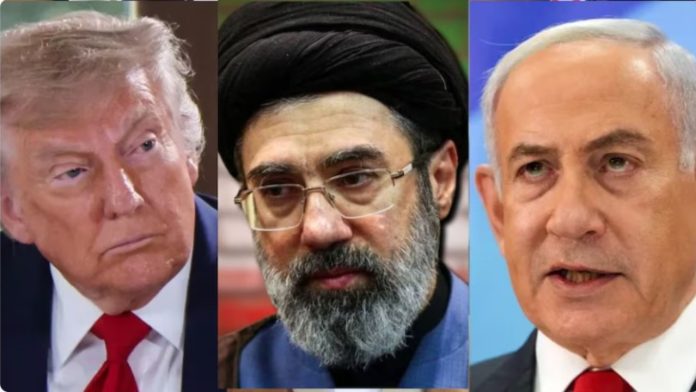
Tensions in West Asia (the Middle East) have escalated to an extremely dangerous level. Iran has issued a clear warning that if the United States and Israel launch fresh attacks against it, it will retaliate by striking seven of the world’s most critical oil and natural gas hubs located in the Gulf region. Tehran stated that the major energy resources of Arab nations fall within the range of its point-target (highly precise) missiles.
According to Iranian military circles and news agency reports, Iran’s missiles can directly target seven of the largest energy centers belonging to Arab nations and Israel. These include the Ghawar oil field in Saudi Arabia, described as the backbone of the country’s oil production — if output there were to stop, more than 5% of global oil supply would be disrupted immediately. Also on the list are Abqaiq and Khurais in Saudi Arabia, home to the world’s largest oil stabilization plant, with a processing capacity of 7 million barrels per day; the Ruwais Refinery and Zakum oil field in the UAE, the country’s second-largest offshore oil field, producing over 1 million barrels per day; the North Field gas field and Ras Laffan LNG facility in Qatar, the world’s largest gas field, accounting for 20% of the world’s LPG/LNG trade and holding 25% of global gas reserves; the Burgan oil field in Kuwait, a key hub with reserves of 67 billion barrels and a production capacity of 2 million barrels per day; the Sitra Refinery and Al-Mihaz facility in Bahrain, the country’s principal refinery and a strategic installation; and the Leviathan and Tamar gas fields in Israel, the country’s largest natural gas fields.
Military analysts believe that if Iran were to strike these key energy installations, the impact would not be confined to the Middle East alone. Global crude oil prices could spike sharply, risking a complete collapse of the global economy and supply chain.
Iran also recalled that during an earlier 40-day period of hostilities, when its South Pars region was attacked, it retaliated by striking one of Qatar’s most important gas refineries. Iranian sources said that at the time, US President Donald Trump responded via his social media platform, Truth Social, assuring that such a mistake would not be repeated. Following Iran’s latest stern warning, Washington, Tel Aviv, and Gulf nations have gone on alert and are holding emergency meetings.