





The flash floods that devastated the Himalayan nation of Nepal have caused severe destruction, flattening numerous buildings and leaving over a thousand people missing. Against this backdrop, experts are warning that India’s northeastern states face a similar looming threat from the massive dam China is constructing on the Brahmaputra river. The dam is being built in the Tibet Autonomous Region under Chinese control, an area that experiences frequent earthquakes. Experts believe that if an earthquake were to strike after the dam’s completion, it could have a severe impact on both India and Bangladesh, given the heightened risk of major flooding triggered by seismic activity in the region. Scientists have cautioned that the Medog Dam could turn into a “water bomb” for India, posing a serious threat to the northeastern states.
China’s massive dam on the Brahmaputra poses a risk to India, especially since New Delhi lacks any water-dispute resolution agreements or other formal mechanisms with Beijing on the matter. The only existing arrangement between the two countries is a memorandum of understanding for sharing data on flow fluctuations, water evaporation, and rainfall in the Brahmaputra, which must be renewed every five years. Reports suggest that if China does not renew this agreement after the dam’s construction, it could pose a grave danger to India. Experts have also pointed out that the construction region is highly prone to natural disasters. Consequently, Indian officials have expressed concern that if any disaster were to strike the Tibetan side of the river in the future and China fails to share information with India, the northeastern states could face the risk of severe flooding.
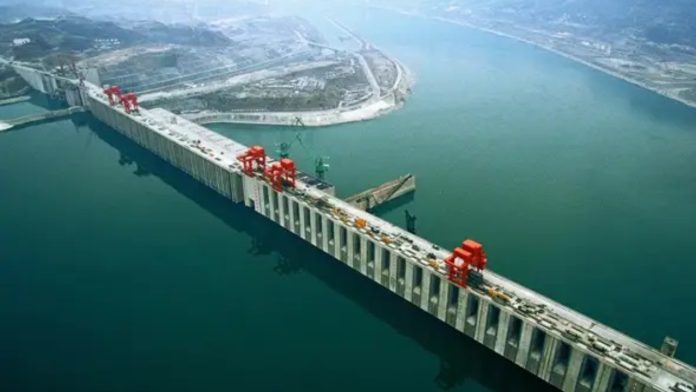
The Brahmaputra river is known as the Yarlung Tsangpo in Tibet, and it is on this river that China is building a massive hydropower project at an estimated cost of $167 billion. The project, which involves the construction of a dam, will be three times larger than the Three Gorges Dam, China’s earlier record-holding structure and the largest dam in the world. At the point known as the “Great Bend” of the Brahmaputra, the river drops nearly 2,000 metres over a short distance, and China believes this sharp descent can be leveraged to generate substantial hydropower. The project is expected to generate 60,000 megawatts of electricity annually. However, the very location of this construction is now emerging as a major concern for India.
A survey conducted under the supervision of the China Geological Survey on this project reportedly identified the presence of the “Peacock Fault” at the base of the construction site, a fracture believed to be active since the Pleistocene era, or the Ice Age. Experts have warned that this fault line could significantly damage infrastructure being built near the hydropower project, including dams, roads, bridges, and tunnels. They have also expressed doubts about the ability to accurately assess the situation in the event of earthquakes in the region.
India has voiced concerns over the Medog dam project, warning that its completion would place complete control over the Brahmaputra’s waters in China’s hands. If China were to store the water for extended periods and release it all at once, it could trigger massive flooding in the northeastern states. Conversely, if China withholds the release of water during summer, the region could face severe water scarcity. Millions of Indians depend on this river for their livelihood, with the Brahmaputra serving as a lifeline for the people of Assam and Arunachal Pradesh, who already face recurring flood-related hardships. Once the dam is complete, India could be left without any water flow from the river, and if any dispute were to arise between the two nations leading to the sudden opening of the dam’s gates, it would cause severe damage to the northeastern states. In response to concerns over Beijing’s mega dam, India is reportedly preparing to construct its own 11,000-megawatt Siang Upper Multipurpose Project on the Siang river in Arunachal Pradesh, intended to help regulate the flow of water coming from upstream.
China Failed to Warn Nepal
Nepal has alleged that China failed to warn it in advance about the flooding, despite reportedly having prior knowledge of the glacier collapse that caused the flood on the Tibetan side, due to the absence of any information-sharing agreement between the two nations. Reports suggest that the lack of a formal bilateral agreement meant Beijing did not alert Kathmandu in time. According to Nepal time, flash floods reportedly struck Kerung County in Tibet at around 8:15 am, and Nepal only became aware of the flooding roughly 45 minutes later. Nepal has alleged that despite this window of time, Chinese officials failed to alert them. By the time Nepal was alerted through local residents and became aware of the unfolding situation, irreversible damage had already occurred.