





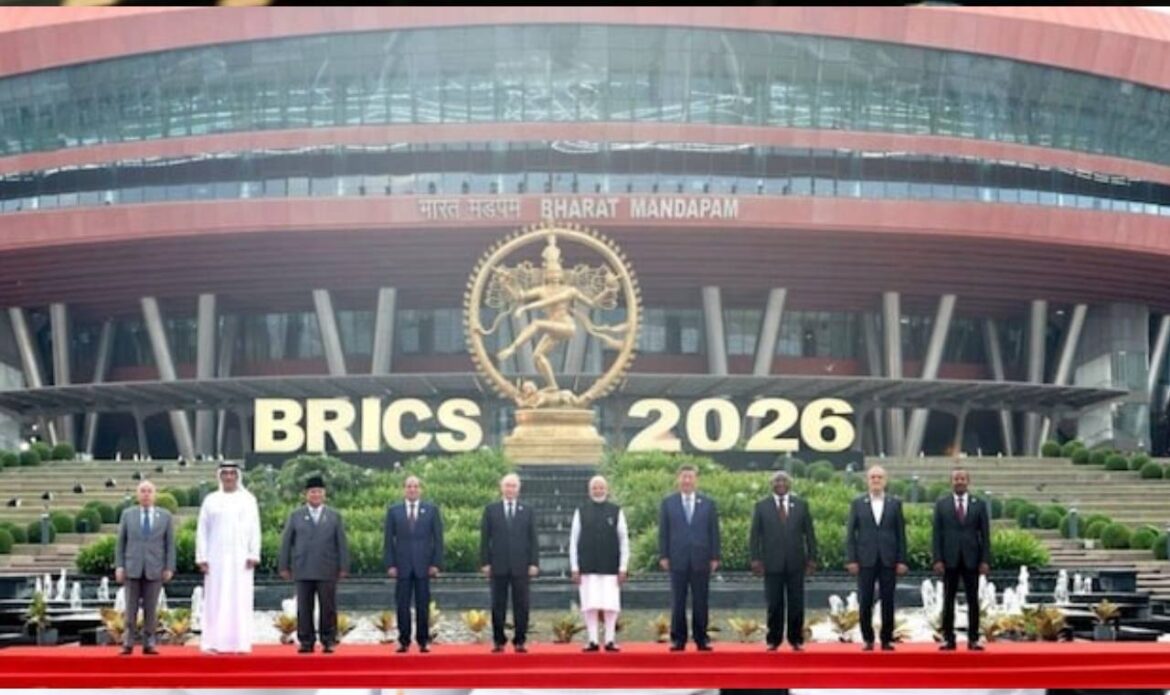
Oil and gas supply is currently the issue causing the greatest concern for countries worldwide, with all nations focusing on energy security following the war between Iran and the United States. Against this backdrop, the meeting of BRICS countries in India has taken on significant importance, since BRICS members such as Saudi Arabia, Russia, Iran, the UAE, China, and Brazil are all major oil producers.
If a good understanding is reached among these countries on oil supply, it could bring some relief to global markets. In particular, easing tensions between countries such as Iran, Saudi Arabia, and the UAE would make oil supply considerably smoother. Alongside oil-producing nations, BRICS also includes major oil-purchasing countries such as India and China.
The Strait of Hormuz and the Bab-el-Mandeb are extremely critical to global oil transport, with large numbers of oil tankers passing through these routes. Any disruption in these regions could damage oil transport and drive up prices worldwide, making it essential that traffic through these routes continues smoothly.
Some BRICS countries hold vast oil reserves and, if needed, could bring some stability to the market by increasing production and sustaining supply. If these countries work together on oil production, exports, and supply routes, fears over an oil shortage could ease — a factor that would also affect LPG supply.
Overall, BRICS countries play a crucial role in the global oil and gas market. If a strong understanding is reached among them, the movement of oil tankers through the Hormuz and Bab-el-Mandeb routes could proceed smoothly, improving energy supply while also helping keep oil prices relatively stable.