





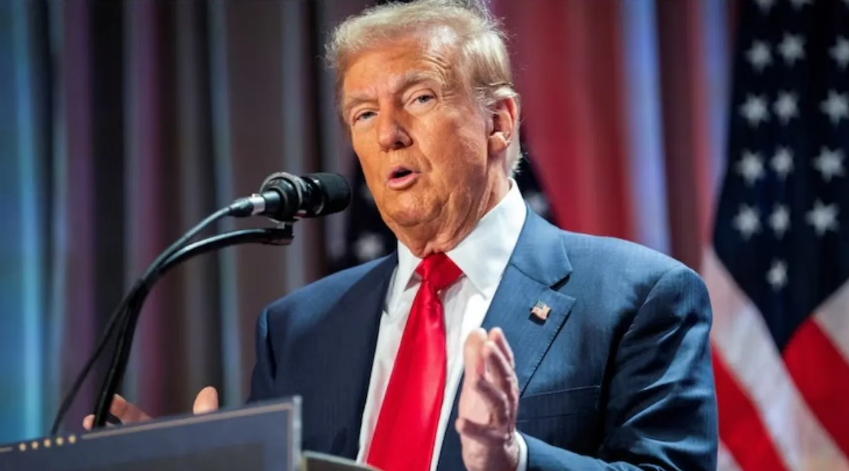
Tensions in the Middle East have escalated despite ongoing peace talks between the United States and Iran, following strong remarks from U.S. President Donald Trump during a Cabinet meeting at the White House. The President issued a stern warning to countries allegedly supporting Iran’s strategic moves in the region, particularly concerning the Strait of Hormuz.
Addressing a reporter’s question, President Trump emphasized that the Strait of Hormuz is an international maritime passage and must remain open for global trade. He asserted that no single country has the authority to control or restrict access to the waterway, underscoring its significance for international energy security.
Trump further stated that all countries in the region, including Oman—an important U.S. ally—must act responsibly in maintaining the neutrality and free movement through the strait. He warned that failure to ensure open navigation could compel the United States to take decisive action, including military measures. The remarks have drawn global attention given the sensitive geopolitical balance in the region.
The Strait of Hormuz is one of the world’s most critical oil transit chokepoints, with nearly one-fifth of global oil supplies passing through it. Any disruption in this route is considered to have immediate global economic implications, particularly for energy markets.
According to reports, Iran has been exploring proposals related to regulating or taxing vessels passing through the Strait of Hormuz, with suggestions that revenue generated from such measures could be shared with Oman. These developments have heightened concerns among global observers, who view the situation as a potential flashpoint for renewed regional instability.