





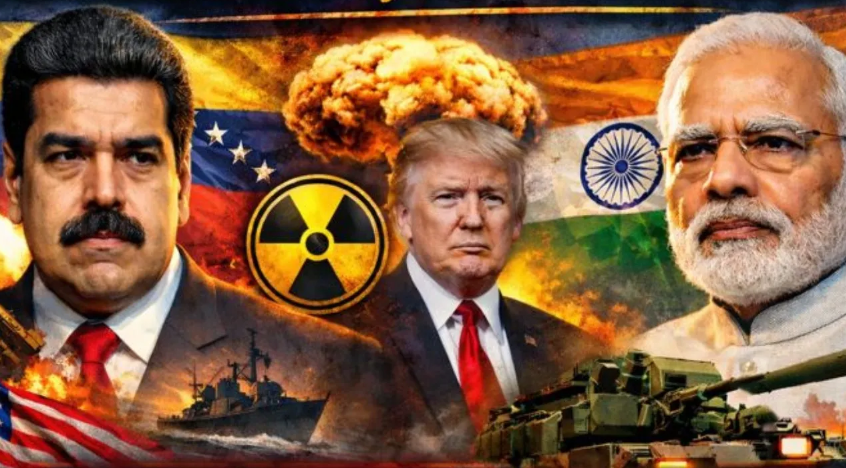
In political discourse, those visible in power are often not the only ones shaping outcomes. Major social or political shifts are frequently attributed to unseen actors operating behind the scenes—commonly referred to as the “Deep State.” The term describes a shadowy network believed to influence governance and policy-making without public accountability. In recent years, the concept has gained prominence in global politics, sparking intense debate across democracies.
From the Cold War rivalry between the United States and the Soviet Union to recent global political crises, Deep State forces are often viewed as more powerful than elected governments. Intelligence agencies, senior military establishments, and entrenched bureaucratic systems are said to have grown into parallel power centers. These entities, which are not directly answerable to constitutional frameworks, are accused of shaping leadership changes, influencing policies, and even destabilizing governments.
The recent political crisis in Venezuela is frequently cited as an illustration of Deep State operations. US-backed actions, including economic sanctions and support for internal unrest, allegedly weakened the elected government. Beyond military influence, international banking systems and global media networks are also believed to have played a role, demonstrating how economic and information warfare have become key tools in modern geopolitical strategies.
The Deep State debate has now entered India’s political narrative. As India emerges as a major global economic force, allegations have surfaced that certain foreign entities are attempting to destabilize the country. Claims include efforts to damage India’s international image, fuel caste and religious divisions, and fund anti-national narratives through select organizations. Analysts note that countering such invisible forces requires heightened public awareness, transparent governance, and strong national security mechanisms to protect democratic institutions.