





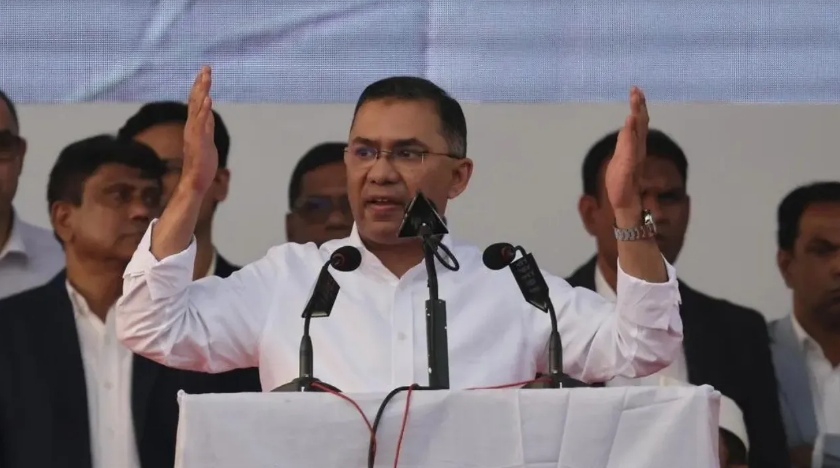
In a major political shift, the Bangladesh Nationalist Party (BNP) ended nearly 25 years of Awami League dominance by securing a decisive majority in the recent parliamentary elections. Contesting in alliance with friendly parties, the BNP won 212 out of 299 seats and is now poised to form the government. Tarique Rahman, son of former President Ziaur Rahman and ex-Prime Minister Khaleda Zia, is expected to assume the role of Prime Minister, marking his first executive position in Bangladesh since returning from London in December 2023.
Rahman, who previously played a key role in his mother’s administration between 2001 and 2006, has long been a controversial figure in Bangladesh politics. During his exile in London from 2008, he oversaw BNP operations while avoiding legal complications following corruption and other cases. Analysts note that his return and assumption of leadership positions signal a recalibration of domestic politics, particularly following minority attacks and political unrest under the final months of Sheikh Hasina’s rule.
The BNP leadership under Rahman is expected to influence Bangladesh-India relations positively. Unlike other factions, Rahman has maintained distance from the anti-India Jamaat-e-Islami party, increasing the likelihood of cooperative diplomacy. He has publicly pledged to support India on strategic issues, including counter-terrorism, resolving river water disputes, and protecting Hindu minorities, raising expectations of strengthened bilateral ties and smoother border management along the 4,100 km shared frontier.
Economically, closer India-Bangladesh relations could benefit both nations. Annual bilateral trade stands at approximately $14 billion, with India enjoying a $10 billion surplus. Bangladesh imports goods such as coffee, tea, auto parts, steel, electricity, cotton, and plastics from India, while 80% of its cotton imports come from India. Political analysts believe Rahman’s government is likely to reinforce trade and economic cooperation, which could boost regional stability and prosperity.
Rahman’s premiership also comes amid ongoing domestic challenges. The interim Yunus government, which governed briefly after Awami League’s fall, left behind strained diplomatic relations with India and internal instability. Rahman’s leadership is expected to stabilize governance, rebuild public trust, and ensure security, particularly for minorities. With West Bengal and Assam state elections scheduled in 2024, Bangladesh’s domestic and foreign policy directions under Tariq Rahman will be closely observed by regional and international stakeholders.