





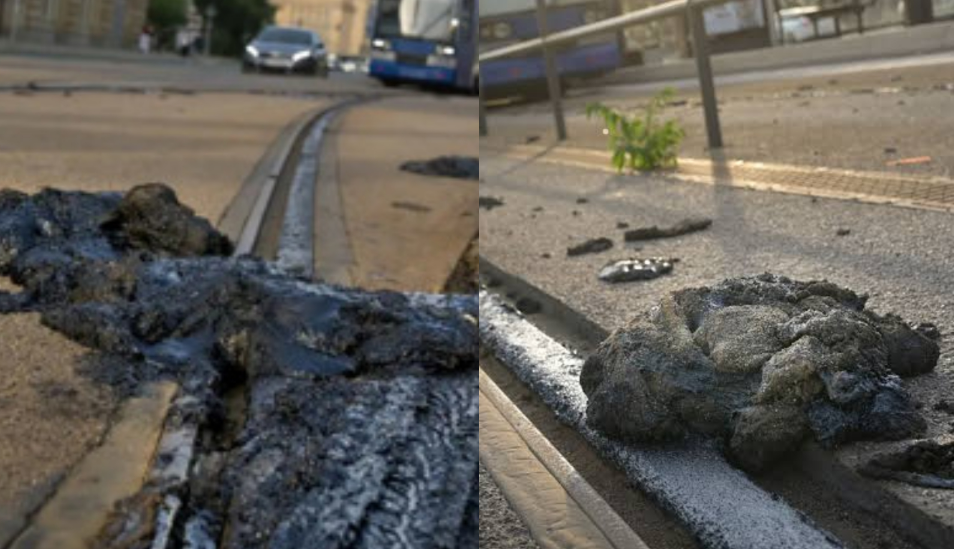
Europe, a continent typically associated with freezing temperatures, is now grappling with an intense heatwave that has turned parts of it into what many are describing as an oven. Thousands of people have reportedly died unable to withstand the extreme heat. The soaring temperatures have caused tar on roads to melt, with vehicles getting their tyres stuck in the molten asphalt, leaving many afraid to even drive out. Notably, the maximum temperature recorded in the affected areas is just around 40 degrees Celsius. By contrast, roads in India remain intact even when temperatures cross 45 degrees Celsius. What explains this difference?
Road construction in any country is typically tailored to local climatic conditions. Much of Europe experiences harsh winters, with snowfall and temperatures dropping to freezing levels. To prevent roads from hardening and cracking in such cold, engineers there use a softer variety of tar known as soft-grade bitumen, which has the flexibility to expand and contract in cold weather, allowing roads to remain durable over long periods despite the cold. However, with changing climate patterns pushing temperatures higher in Europe, that same soft bitumen — designed to withstand cold — now works against the region in the heat.
Once temperatures cross 40 degrees Celsius, this bitumen turns excessively soft. As heavy vehicles pass over it, roads begin to sink, and the melting tar sticks to tyres. India’s climate, in comparison, is markedly different, and engineers here have accounted for this by using far more heat-resistant viscosity-grade bitumen such as VG-30 and VG-40, mixed with larger aggregate stones during construction. This harder tar can withstand extreme heat and scorching conditions without softening, even when temperatures exceed 45 degrees Celsius, and is also better equipped to bear heavy traffic loads without developing potholes. This is why roads in India remain intact even as temperatures cross 45 degrees Celsius.