





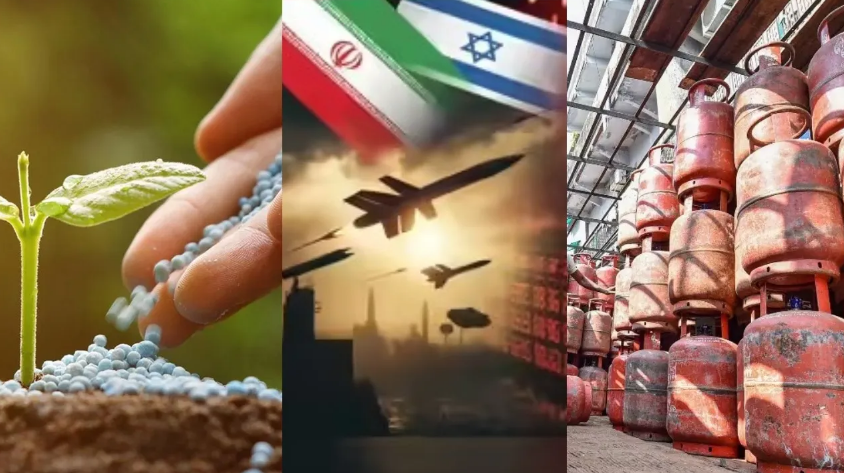
The ongoing conflict in West Asia is emerging as a major challenge for India, with impacts now extending beyond the diaspora to farmers’ fields and households across the country. Disruptions in the supply of raw materials essential for fertilizer production are signaling a potential nationwide shortage, raising concerns among policymakers and agricultural experts.
Nearly 30 of India’s 32 urea plants rely on naphtha imported from Qatar. However, Qatar recently announced it cannot supply naphtha due to the war, posing a serious challenge to domestic production. Procuring naphtha from alternative sources would cost three times the current price, while transport routes such as the Strait of Hormuz face restrictions imposed by Iran, effectively halting supply. Analysts warn that continued conflict could push urea prices beyond $1,000 per ton (₹91,742) and DAP prices from $850 to $1,000 per ton, making fertilizers unaffordable for ordinary farmers.
The Fertilizer Association of India emphasizes that imports are critical to meeting domestic demand. A sustained disruption in supplies could lead to severe shortages during the upcoming summer sowing season, potentially triggering a farmer crisis. Countries supplying key sulfur and DAP raw materials, including Saudi Arabia, Morocco, and Jordan, are also affected due to transport restrictions, highlighting the broader economic impact of the war on India.
India imports about 40% of its natural gas (approximately 27 million tons annually) from Qatar. With Qatari production halted due to attacks linked to the Iran-Israel conflict, global gas prices have surged. Houthi attacks in the Red Sea and the closure of the Strait of Hormuz have left gas tankers such as Rahi and Aseem stranded off the Gujarat coast, intensifying the supply disruption.
The combined impact on fertilizers and cooking gas is expected to strain India’s agricultural and domestic energy sectors. Experts warn that if the conflict continues, farmers may face unprecedented challenges in procuring fertilizers, while households across the country could experience significant shortages in cooking gas supply, underlining the far-reaching consequences of the West Asia war on India’s economy.