





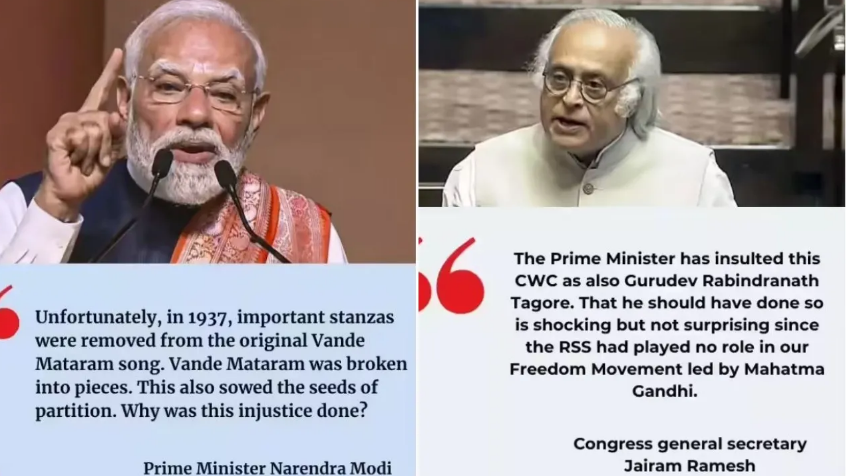
New Delhi: Parliament on Monday launched a special discussion to commemorate 150 years of Vande Mataram, one of the most defining and debated symbols of India’s freedom struggle. Prime Minister Narendra Modi initiated the debate in the Lok Sabha, while Defence Minister Rajnath Singh is scheduled to conclude it. The BJP has been allotted three hours of speaking time, and the overall duration of the discussion is expected to be nearly ten hours. A similar debate will be taken up in the Rajya Sabha on Tuesday, to be opened by Union Home Minister Amit Shah.
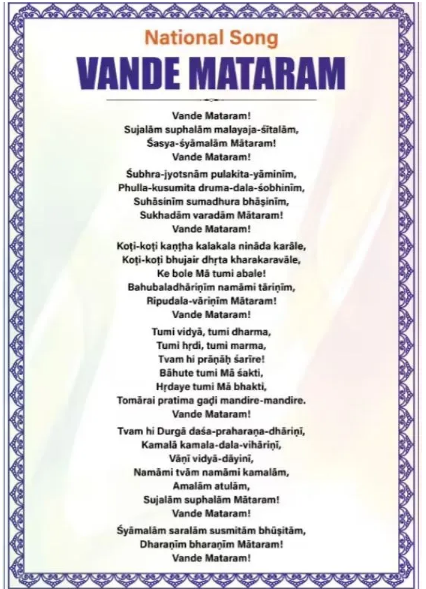
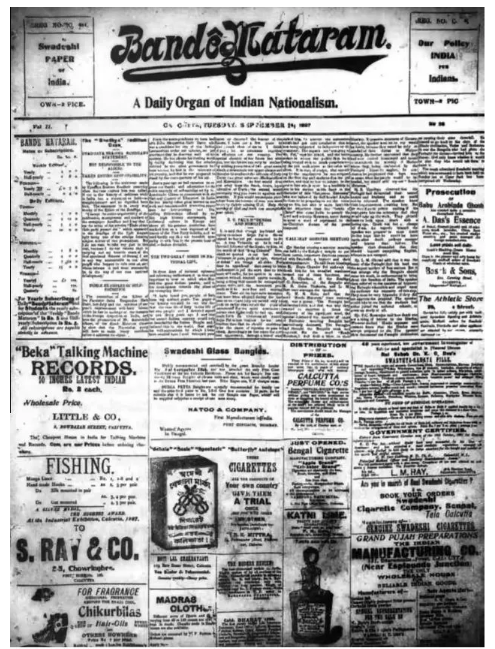
During his address, Prime Minister Modi described Vande Mataram as a mantra of unity and courage and said the commemoration is not merely a celebratory ceremony but a reflection on its historical evolution. He noted that the patriotic hymn, which first appeared in a Bengali novel, has travelled through decades of political and ideological disputes involving religious imagery, nationalist identity and strategic leadership decisions taken before independence.
The ongoing debate comes amid renewed political tensions following Modi’s remarks at a recent commemoration event, where he alleged that the Congress, during the 1937 Faizabad session, removed key stanzas from the original composition and thereby sowed the seeds of division. The Prime Minister argued that altering the song fragmented its spirit and weakened national unity, linking the debate to his broader narrative of cultural heritage and Viksit Bharat.
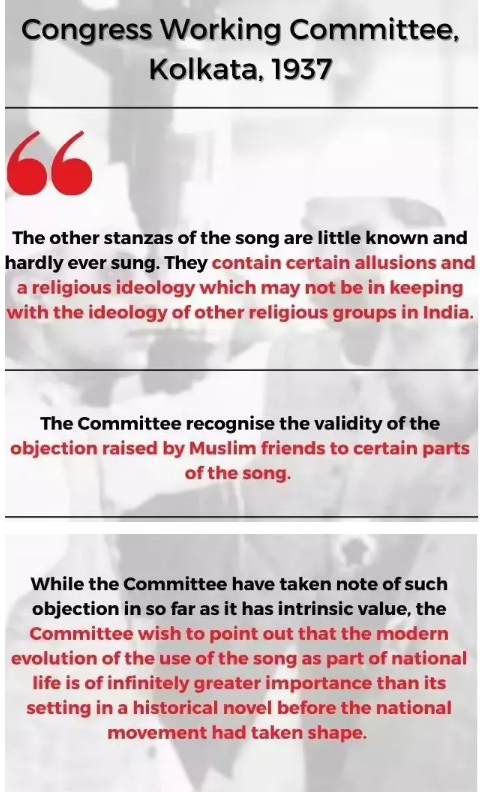
Congress strongly rejected the allegation and responded by citing Mahatma Gandhi’s collected works, maintaining that the 1937 decision was a sensitive compromise taken by the Working Committee, which included Gandhi, Jawaharlal Nehru, Sardar Patel, Subhas Chandra Bose, Rajendra Prasad, Sarojini Naidu and others. It said only the first two stanzas were adopted because they were nationally recognised, while the remaining verses contained religious imagery that some communities objected to. Congress accused the Prime Minister of targeting the legacy of the freedom movement to divert attention from issues such as unemployment and economic inequality.
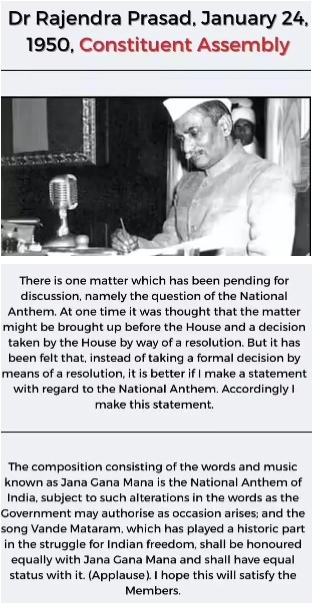
Post-independence, Vande Mataram continued to trigger debate in the Constituent Assembly. On August 14, 1947, the midnight session began with Vande Mataram and ended with Jana Gana Mana. On January 24, 1950, both compositions were sung again, after which Dr Rajendra Prasad declared Jana Gana Mana the National Anthem and Vande Mataram the National Song, granting both equal honour and status.
Meanwhile, sections of the Muslim community continue to oppose the singing of the full version of Vande Mataram, arguing that verses depicting the motherland as Goddess Durga and Lakshmi conflict with the Islamic principle of Tawhid. Jamiat-ul-Ulama leader Maulana Madani stated that singing such verses is against their faith and conscience, asserting that Muslims cannot recite hymns attributing divinity to anyone other than Allah.