





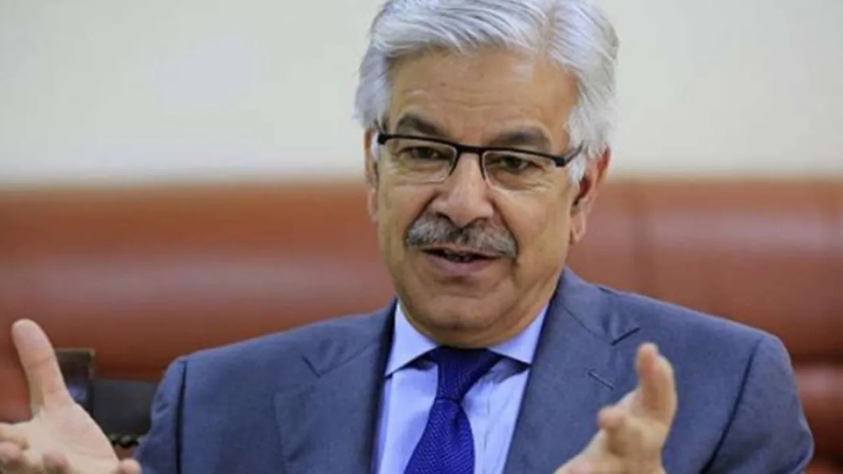
Pakistan’s leadership has once again drawn criticism for projecting confidence despite the country’s deepening economic troubles. Even as the nation struggles with mounting debt and relies heavily on international loans, recent remarks by Defence Minister Khawaja Asif have triggered renewed debate. His claims of rising global demand for Pakistan’s fighter jets have raised questions about their credibility against the backdrop of the country’s financial reality.
Pakistan maintains a sizeable defence establishment but lacks the capability to independently manufacture advanced fighter aircraft. It largely depends on imports and partnerships with countries such as China, the United States, and others for its air power. However, following limited discussions with Bangladesh and small-scale defence exports, Khawaja Asif claimed that Pakistan’s fighter jets have gained significant global demand after the conflict with India, asserting that defence exports could potentially reduce the country’s dependence on International Monetary Fund (IMF) assistance.
Economic indicators, however, contradict these assertions. Pakistan has recently approached the IMF again for financial support and is reportedly preparing to privatise its national airline to raise funds. The Shehbaz Sharif-led government is also seeking relaxations in IMF loan conditions to accommodate subsidies and concessions in the 2026–27 budget. Analysts note that the defence minister’s claims are largely based on limited sales of JF-17 and J-10 aircraft to smaller countries such as Azerbaijan and Libya, while Bangladesh remains only in the discussion stage.
Defence experts point out that Pakistan does not possess full indigenous fighter jet manufacturing capabilities. The JF-17 programme relies heavily on components sourced from multiple countries, with China handling most of the design and production. Even if aircraft sales materialise, much of the revenue would go to partner nations supplying critical components, leaving Pakistan with a minimal share. With external debt estimated at around USD 300 billion, analysts argue that such defence exports would have little impact on easing Pakistan’s broader economic challenges.