





Petrol prices in Pakistan have been significantly reduced following widespread public protests against the recent surge in fuel costs. Responding to mounting pressure, Prime Minister Shehbaz Sharif announced a cut of ₹80 per litre in petrol prices. With this revision, the price of petrol has dropped to ₹378 per litre. The government stated that the financial burden of this reduction will be managed through adjustments in the petroleum levy.
The relief comes just a day after the Islamabad government had sharply increased fuel prices, citing rising global crude oil costs. Petrol prices were raised to ₹458.40 per litre, while diesel prices surged to ₹520.35 per litre. This marked a steep increase of approximately 42.7% in petrol prices and nearly 54.9% in diesel prices, triggering strong public backlash.
Explaining the hike, Pakistan’s Petroleum Minister Ali Pervaiz Malik said that escalating tensions between the United States and Iran had disrupted international oil markets, making the increase unavoidable. He noted that this was the second fuel price hike within a month, following an earlier increase of around 20% due to the impact of the US-Israel conflict.
Pakistan’s heavy reliance on oil imports from countries such as Saudi Arabia and United Arab Emirates has made its economy highly sensitive to global price fluctuations. Even minor changes in international crude oil prices tend to have a significant impact on the country’s domestic fuel pricing and overall economic stability.
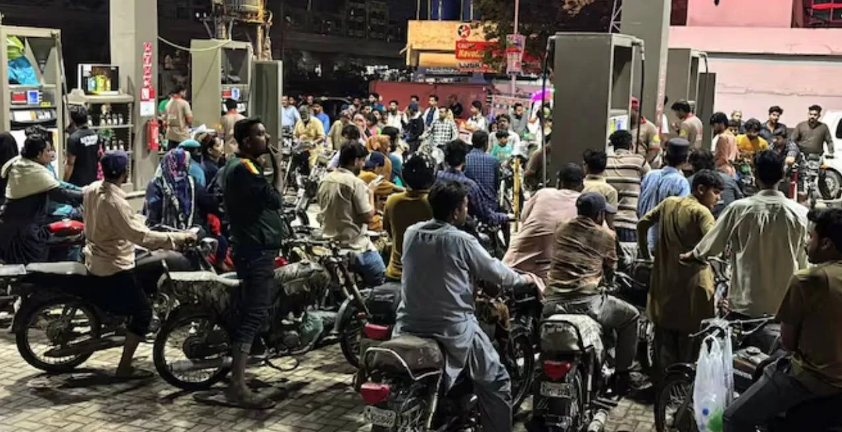
The sudden surge in prices sparked widespread protests across Pakistan, with long queues forming at petrol stations and citizens expressing anger over the added financial burden amid an ongoing economic crisis. In response to public pressure, the government not only reduced prices but also introduced relief measures. Finance Minister Muhammad Aurangzeb announced a subsidy of ₹100 per litre on up to 20 litres of petrol per month for two-wheeler users, adding that the scheme will remain in effect for three months.