





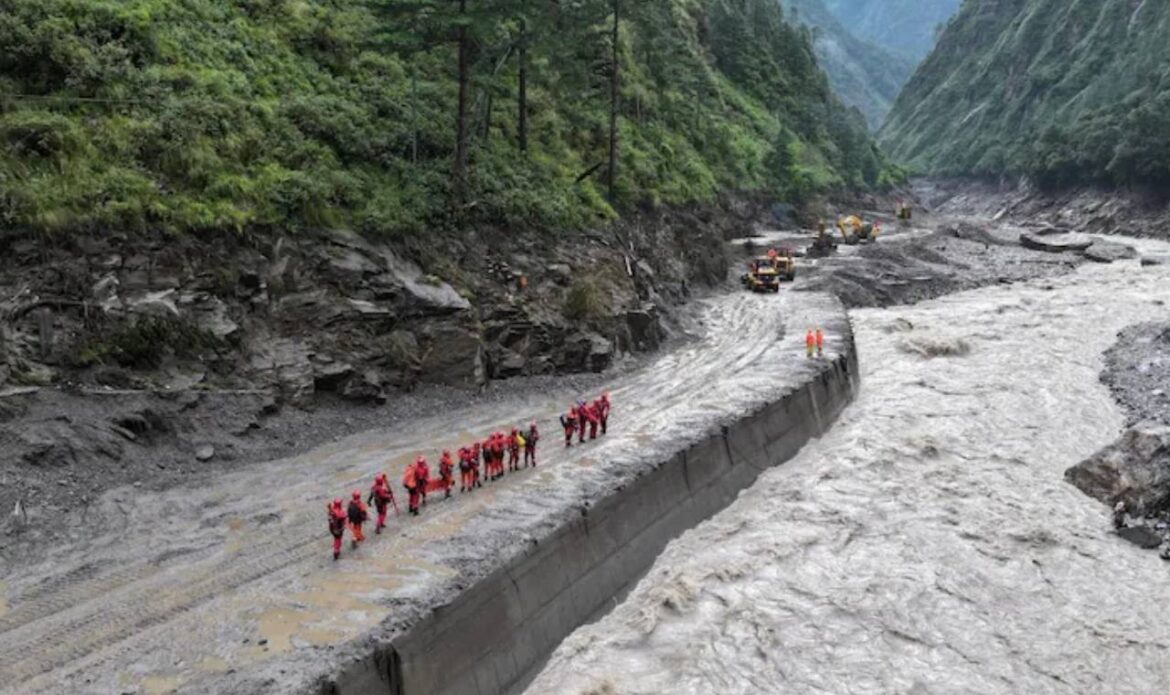
The recent flash floods in Nepal, which claimed 272 lives, have left the country in deep mourning. However, it has now emerged that two significant reports had issued strong warnings about the rapid melting of glaciers in the Hindu Kush Himalaya (HKH) region just five months before the disaster struck.
The reports were released in March by the Kathmandu-based International Centre for Integrated Mountain Development (ICIMOD), a body whose member countries include India, Nepal, Bhutan, and China. The organisation had expressed concern that glaciers in the Himalayas were melting at an accelerating pace, noting that the rate of melting had doubled since the year 2000. The reports stated that glaciers in the region had lost roughly 27 metres in ice thickness since 1975.
Scientists are currently investigating the exact causes behind the Nepal floods. However, experts believe that a key contributing factor may have been rainfall occurring at altitudes of 4,000 metres or higher, where snowfall would typically be expected instead. According to a scientist at the Wadia Institute of Himalayan Geology in Dehradun, sharply rising temperatures have led to unprecedented rainfall at high altitudes, which in turn is accelerating the melting of glaciers.
Separately, ICIMOD noted that glaciers in the HKH region lost around 12 percent of their total area and 9 percent of their estimated ice reserves between 1990 and 2020. The HKH Glacier Outlook 2026 report had warned that glacial regions in the area are reaching a point of irreversible decline.
Mohammad Farooq Azam, Associate Professor at IIT Indore and Senior Cryosphere Specialist at ICIMOD, said that the shrinking of snow cover, the retreat of glaciers, and the expansion of barren terrain are causing these areas to absorb more heat, further destabilising mountain slopes.