





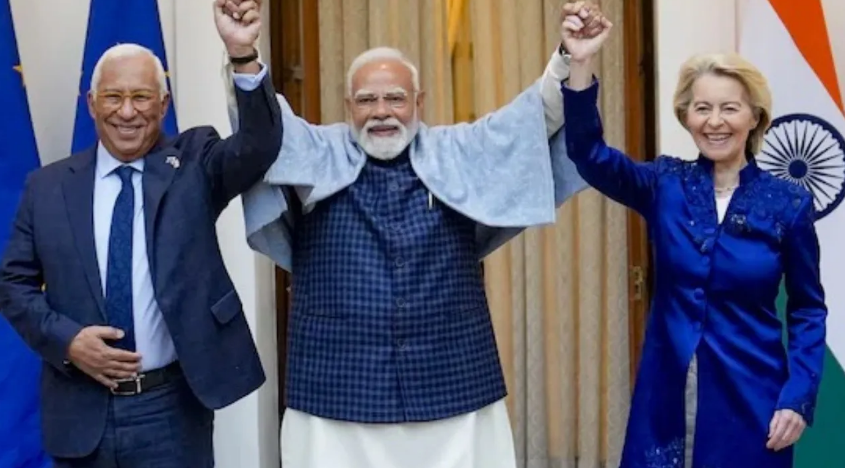
India and the European Union on Tuesday sealed a historic Free Trade Agreement (FTA), ending nearly 18 years of negotiations. Prime Minister Narendra Modi termed the pact the “mother of all deals” while announcing it in New Delhi alongside European Commission President Ursula von der Leyen and European Council President Antonio Costa. The agreement is expected to significantly deepen economic ties between the two blocs, which together account for about 25% of global GDP and nearly one-third of world trade.
Major Tariff Cuts Announced
Under the FTA, tariffs on more than 90% of traded goods will be reduced, with several items becoming completely duty-free. The EU will remove duties on 99.5% of Indian exports over the next seven years. India has agreed to slash import duties on foreign cars from the current 110% to 10% over five years, while wine tariffs will be cut immediately from 150% to 75% and gradually lowered to 20%, marking a major step toward market liberalisation.
Indian Sectors Set to Gain
The deal is set to open new opportunities for multiple Indian sectors, including textiles and garments, gems and jewellery, pharmaceuticals, chemicals, and IT services. Improved market access is expected for medical devices, machinery, and chemicals, while tariffs on olive oil and vegetable oil are also likely to be removed. Easier mobility for IT professionals is another key feature of the agreement. However, analysts warn that cheaper European imports could increase competitive pressure on domestic industries, particularly automobiles, dairy products, and wine producers.
Boost to Bilateral Trade Ties
Experts say the India–EU pact sends a strong positive signal to global trade at a time of economic uncertainty. The EU is currently India’s largest trading partner, with bilateral trade reaching USD 136 billion in 2024–25. European firms already play a major role in India’s manufacturing, clean energy, and digital sectors, while Indian IT and pharmaceutical companies maintain a significant presence across Europe, underscoring the growing strategic economic partnership between the two sides.