





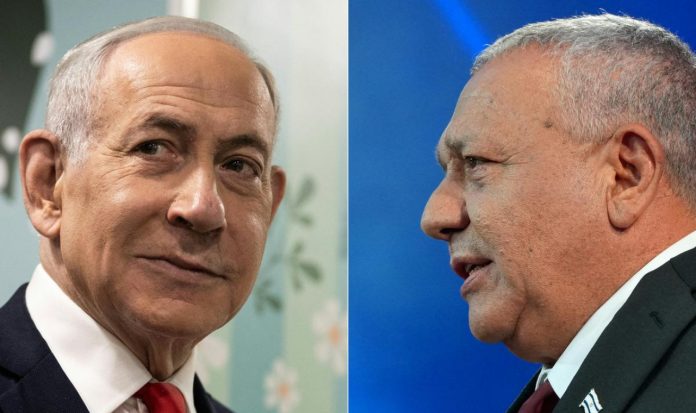
Jerusalem: The results of Israel’s recently concluded parliamentary elections have given no party a clear majority, triggering a political crisis. The Knesset has 120 seats, and a party needs at least 61 to form a government, a threshold that no single party has reached.
Prime Minister Benjamin Netanyahu’s Likud party won only 53 seats, while the Yashar party, led by his main rival and opposition leader Gadi Eisenkot, secured 48. Arab parties together won 19 seats. On these numbers, the support of the Arab parties has become essential for any party seeking to form a government.
This is where the real difficulty arises. The major parties, which have for years portrayed Arab parties as anti-Jewish and criticised them sharply, are now hesitant to seek their support. Leaders fear that forming a government with their backing would provoke strong public backlash and endanger their political futures. Compared with Netanyahu, however, Eisenkot is showing somewhat greater willingness to form a government with Arab party support, subject to certain rules and conditions.
Having anticipated this, Netanyahu has put a new plan into action. Rather than risk relying on Arab parties, he has turned his attention directly to his chief rival. Determined to retain power even if it means joining hands with an adversary, Netanyahu has reportedly brought in a secret “Plan B,” seeking to win over Eisenkot by offering him positions of power.
Under this plan, Netanyahu’s camp is placing two offers before Eisenkot. The first is that Netanyahu would continue as Prime Minister, while Eisenkot would be given the government’s most crucial and powerful ministries. The second is that the two would share the post of Prime Minister equally, each serving half the term.
Eisenkot has, however, already made it clear that he will not work under Netanyahu’s leadership. Even so, Netanyahu’s camp has not given up and continues to send emissaries to persuade him. The manoeuvring is generating unprecedented suspense in Israel. Whether Netanyahu’s secret plan succeeds, or the opposition leader forms a government with Arab party support, remains to be seen.