





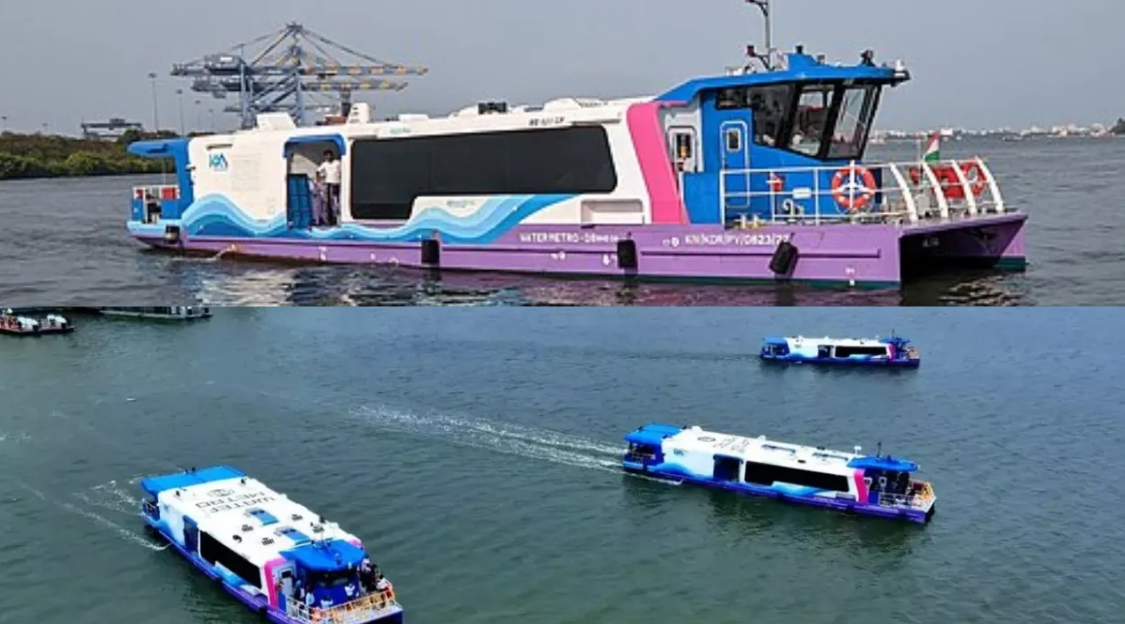
India’s transport sector is set for a major transformation as the Central government accelerates plans to expand the ‘Water Metro’ project across multiple cities. The initiative aims to reduce urban traffic congestion, promote eco-friendly mobility, and provide an affordable alternative mode of transport. Under the first phase, the government has identified 18 cities for implementation, with initial focus on key urban and riverine locations.
Cities including Guwahati, Srinagar, Patna, Varanasi, Ayodhya, and Prayagraj have been shortlisted for the rollout. Officials said the project will later be extended to additional cities based on geographical feasibility and public demand.
The Water Metro system is a modern water-based public transport network designed for cities located along rivers, lakes, or backwaters. Unlike conventional metro systems, it operates using electric or hybrid boats, offering a sustainable and low-emission travel option. The model also requires significantly lower land acquisition and construction costs, enabling faster implementation compared to traditional rail-based metro projects.
India’s first Water Metro service was launched in Kochi in 2023 and has been operating successfully since then. The Kochi Water Metro connects 38 stations and runs daily services from morning to evening, catering to both commuters and tourists. Encouraged by its success, the Centre has decided to replicate the model in other parts of the country. The vessels are equipped with modern facilities such as free Wi-Fi, CCTV surveillance, charging points, and adequate safety equipment including life jackets.
The government is also focusing on keeping fares affordable to ensure accessibility for all sections of society. Based on the Kochi model, ticket prices in other cities are expected to remain under ₹40 for single journeys, with weekly and monthly passes likely priced at approximately ₹180 and ₹600 respectively. Officials stated that the project is expected to ease urban traffic pressure, promote tourism, and significantly contribute to sustainable urban development across India.