





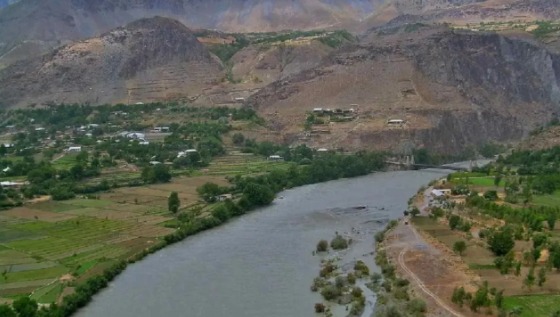
Afghanistan’s Taliban government has approved a major dam project on the Kunar River, which flows between Afghanistan and Pakistan. The project, aimed at diverting water from the Kunar River to the Darunta Dam in Nangarhar province, has caused significant concern in Pakistan. With this decision, Afghanistan is preparing to address water shortages in its Nangarhar region, which will have positive implications for the country. However, Pakistan, which depends heavily on the Kunar River for its water supply, faces the risk of severe water shortages, particularly in the Khyber Pakhtunkhwa province, which could turn into a desert without this vital resource.
The Kunar River, which originates from the Hindu Kush mountains in Pakistan’s Chitral district and flows into Afghanistan, eventually re-enters Pakistan, merging with the Indus River. It serves as a crucial resource for agriculture, drinking water, and power generation in the region. The proposed dam would severely impact these sectors in Pakistan, especially in areas like Khyber Pakhtunkhwa, Punjab, and the Attock region. Given that there are no formal water-sharing agreements between Pakistan and Afghanistan over the Kunar River, Pakistan has limited options to stop the project.
In response to Afghanistan’s dam project, India has expressed strong support for Afghanistan’s efforts to manage its water resources. During a visit by Afghanistan’s Foreign Minister Amir Khan Muttaqi, India announced its backing for Afghanistan’s hydropower and water management initiatives. India’s Ministry of External Affairs confirmed that the country would continue to support Afghanistan in its water management projects, reinforcing its commitment to help Afghanistan build sustainable infrastructure, including dams. India has already assisted in constructing several dams in Afghanistan, including the Salma Dam in Herat province.
This move comes amidst growing tensions between Afghanistan and Pakistan over water resources, with Pakistan already facing an economic crisis and food insecurity. Pakistan’s inability to control water flows from the Kunar River highlights the broader regional challenges, as Afghanistan exercises its rights over its natural resources. The completion of this project will likely have long-term geopolitical implications, and as the Taliban accelerates its plans, this water dispute is poised to become a focal point of international discussions in the coming months.