





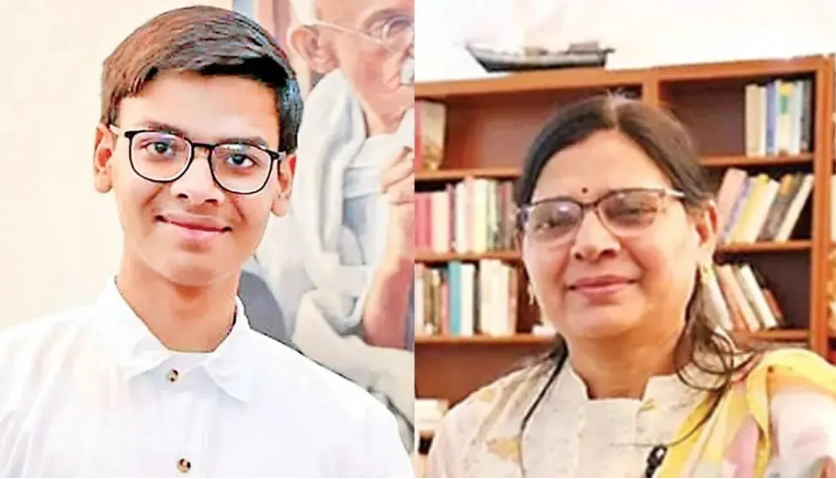
This is the age of the internet, and India’s Gen Z is proving that technology is not just a tool for entertainment — it is a weapon for accountability. Nowhere is this more evident than in the story of Sarthak Siddhanth, a teenager from Jharkhand, who single-handedly exposed systemic irregularities in the evaluation process of the Central Board of Secondary Education (CBSE) and triggered a chain of events that led to the removal of the board’s top two officials.
Sarthak was born in Bokaro Steel Plant township in Jharkhand. His parents, who ran a computer training institute, had married across caste lines — a courageous decision that defined the family’s ethos of questioning injustice. From a young age, the children were taught to be socially aware and to speak up against wrongdoing. Sarthak took to computers early, mastering internet usage by the age of six. By twelve, he had taught himself ethical hacking and stunned his school administration by identifying vulnerabilities on the Delhi Public School website and reporting them to the management.
When Sarthak was in Class 10, his father passed away after a prolonged illness, plunging the family into grief. His mother, refusing to be broken, relocated with her two children to Ranchi, the state capital. It was she who shaped Sarthak’s social and political consciousness. Every evening over dinner, the two would discuss the day’s news and analyse current events — a habit that deepened Sarthak’s sense of civic responsibility and his instinct to fight for public causes.
Driven by the idea of civic technology, Sarthak built a website in 2023 to tackle Ranchi’s potholed roads. Citizens could photograph a damaged road, upload it with location details, and the platform would automatically identify the relevant municipal corporation division and send a complaint letter to the concerned official or representative — following up repeatedly until the issue was resolved. The initiative proved remarkably successful within the city.
It was during this work that Sarthak gained a thorough understanding of government tender processes and the irregularities embedded within them. Around the same time, he struck up an acquaintance with Sanjay Maurya, a young reporter with the Hindustan Times. The partnership became a powerful combination — Sarthak would identify technical loopholes in government websites and tender documents, while Sanjay would translate those findings into published news stories that reached the public.
When CBSE announced Class 12 results on May 3, the pass percentage stood at just 85.20 — the lowest since 2019. A staggering 11 lakh students, suspecting their marks had been undercounted, applied for scanned copies of their answer sheets. Sarthak was among them. When the copies arrived, he noticed they were blurry and illegible, and strongly suspected a flaw in the On-Screen Marking (OSM) system that CBSE had introduced this year — a method by which answer papers are scanned and evaluated digitally.
Sarthak turned his investigation toward the company that had won the OSM tender. He identified it as Coempt Edutech, and then made a damning discovery: this was the same company that, operating under the name Globarena, had been responsible for the catastrophic Telangana Intermediate results fiasco in 2019 — a debacle that had led to the deaths of 23 students. He then uncovered evidence that CBSE had altered as many as 15 conditions across three separate tenders, apparently to ensure the contract was awarded to this very company. On May 24, Sanjay Maurya published the findings in the newspaper while Sarthak laid out the entire case on his blog in plain language accessible to ordinary readers.
The revelations sent shockwaves across the country. On June 2, the Parliamentary Standing Committee on Education extended a special invitation to Sarthak to appear before it. For an hour, this Gen Z teenager walked senior officials and MPs through the tender irregularities in methodical detail, leaving the room stunned. When MPs turned to the CBSE Chairman present in the room with pointed questions, he admitted he had no answers. By that same evening, the Central government acted decisively — removing both the CBSE Chairman and Secretary from their positions in a move that sent a clear signal across the education establishment.
A boy who had just completed his Class 12 examinations had pulled at one thread and unravelled the fabric of an entire institution.