



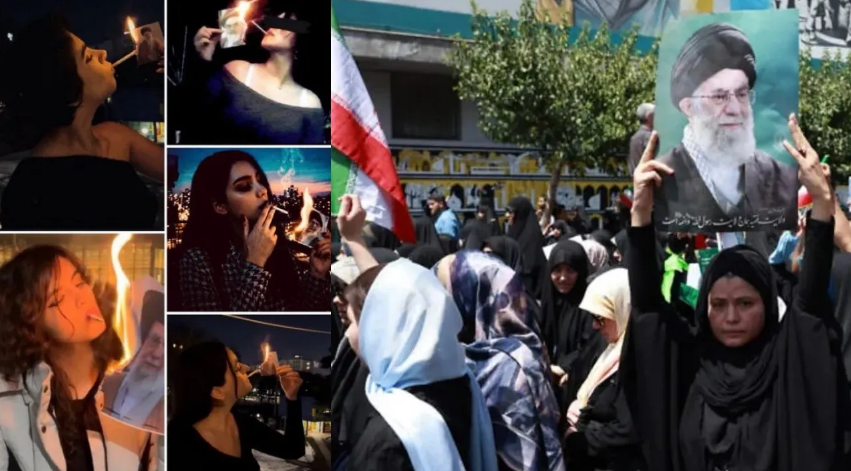
Women-led protests against Iran’s Islamic government have escalated in intensity, marking a significant resurgence of the “Women, Life, Freedom” movement that began in 2022 following the death of Mahsa Amini. Social media footage shows young Iranian women burning photographs of Supreme Leader Ayatollah Ali Khamenei and lighting cigarettes in the flames while chanting slogans demanding his resignation. The imagery has drawn global attention, highlighting the growing defiance of state authority.
According to the US-based Human Rights Activists News Agency (HRANA), the recent unrest has resulted in at least 34 civilian deaths and four security personnel casualties, with over 2,200 arrests reported. Analysts attribute the protests to widespread dissatisfaction with Iran’s political and religious governance. Iranian law considers desecrating the Supreme Leader’s image a serious offense, punishable by long-term imprisonment or even execution, while women publicly smoking, although not illegal, is viewed as socially and religiously unacceptable. The combination of these acts signals a direct challenge to both the hijab mandate and broader government authority.
#WATCH | An Iranian girl burns a picture of Ayatollah Khamenei and lights her cigarette, a new trend in Iran! Young Iranian women are leading the revolution.
(Video/Picture courtesy : X)#Iran #IranProtests pic.twitter.com/Yxj3VM7SEJ— Deccan Chronicle (@DeccanChronicle) January 10, 2026
The protests, now referred to as “Hijab 2.0,” trace their roots to the 2022 death of Mahsa Amini in police custody, which sparked nationwide demonstrations where women publicly cut their hair and removed hijabs. The latest wave has been further intensified by economic challenges, including soaring inflation, a collapsing currency, and rising food prices, prompting citizens to demand not only hijab reforms but also broader political and social change. Demonstrations initially erupted at Tehran’s Grand Bazaar and have since spread to 31 provinces across the country.
In response, the Iranian government has implemented an internet shutdown and deployed security forces using tear gas and live ammunition to suppress protesters. Despite the crackdown, women continue to defy authorities, chanting slogans referencing decades of repression since the 1979 Islamic Revolution. Regional geopolitical challenges, such as Israeli attacks on Iran-backed groups in Gaza, Lebanon, Yemen, and Iraq, alongside domestic economic hardships, have further complicated Supreme Leader Khamenei’s position, intensifying both internal unrest and international scrutiny.
The movement underscores a combination of economic discontent and demands for social freedom, with women taking a prominent role in challenging Iran’s religious and political status quo. Analysts suggest that the protests reflect a broader call for systemic reform and highlight the Iranian population’s growing resistance to state-imposed restrictions.
Security officials continue to monitor the situation closely, emphasizing the potential for further escalation as citizens nationwide maintain momentum in their campaign for both civil liberties and economic justice.