





- Ravi Prakash
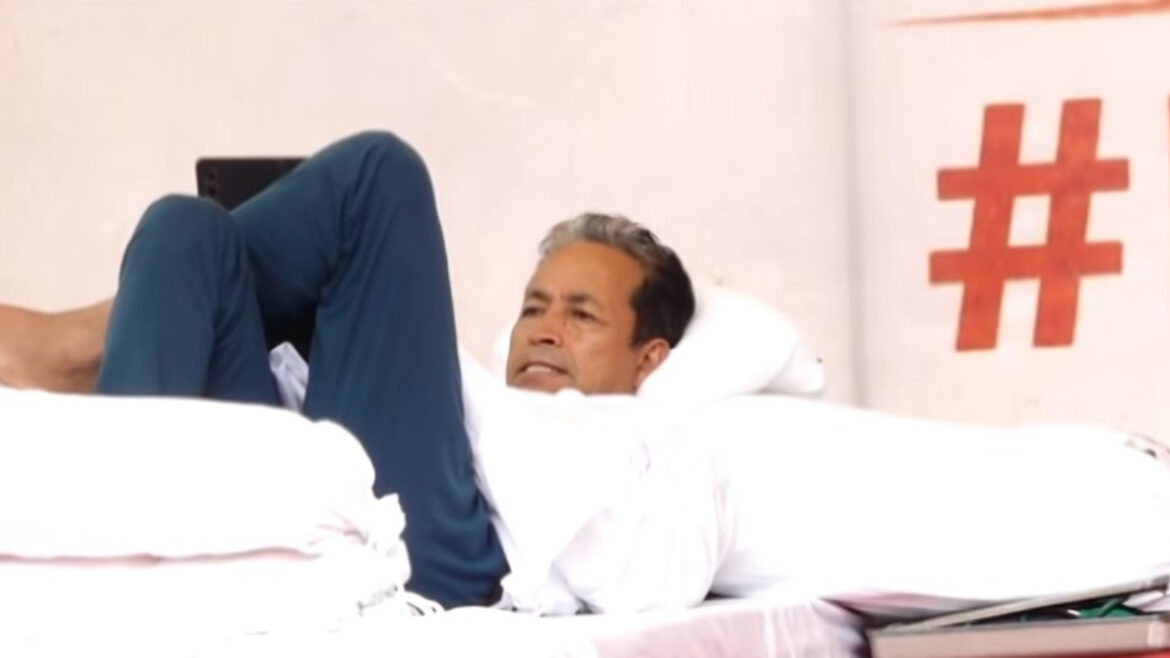
There are no rail roko blockades here. No stone-pelting. No destruction of government property. No violence… only a peaceful hunger strike! Twenty days have passed. Now, one single question is being asked loudly across the country: why is the government still silent?
This isn’t just Sonam Wangchuk’s story. It’s a story about democracy. Because protests happen in every democracy. Governments have every right to disagree with those protests. Governments can reject the demands. Governments can say no to talks. But one question still remains: shouldn’t there at least be an attempt to talk to a citizen who has been peacefully fasting for 20 days? That is the question India is asking today.
Who is this Sonam Wangchuk?
Many of us don’t know Sonam Wangchuk as a politician. We know Sonam as an engineer. An innovator. An education reformer. A Ramon Magsaysay Award recipient. The person who inspired the iconic character “Phunsukh Wangdu” in the movie “3 Idiots”! For decades he has lived in the mountains of Ladakh, working tirelessly to transform the education system there, create pro-environment technology, and bring light into the lives of local people. But today, that same person is sitting at Jantar Mantar. He is on a fast unto death.
Sonam’s protest relates to the NEET controversy. His demand: accountability for lakhs of students! His demand is that the Union Education Minister resign, and that public trust in India’s examination system be restored. One may agree or disagree with Sonam’s demands… but one fact cannot be denied.
For the past 20 days, Sonam has continued his fight through the most sacred, peaceful form of protest that democracy has given us. As Sonam’s health has deteriorated, a remarkable shift has begun. Even people who never agree with each other are now saying the same thing. Lawyers. Actors. Scientists. Politicians. NRIs… one after another, they are all demanding just one thing. Not necessarily that the demands be accepted. Not that the government surrender. Simply — that talks must happen.
One of the first organizations to raise concern on this was the Supreme Court Bar Association. The Supreme Court Bar Association expressed deep concern over Sonam Wangchuk’s health. It bluntly stated that Sonam’s fast has stirred the nation’s conscience, but that the government’s and the system’s conscience has failed to understand it from a humane perspective. It called this deeply regrettable.
Soon after, actor and stand-up comedian Vir Das also entered the discussion. Interestingly, Vir Das made no political statements at all. He asked just one question: if a person has been on a hunger strike for so many days, is it really so hard to just talk to him? That question is no longer just one person’s question. Now it is echoing across the entire country. Because this story is no longer just about Sonam Wangchuk. It is something much bigger.
What direction is a system heading in when a democratic nation stops even talking to a peaceful protest? What danger does the rulers’ silence lead to? Because as the days pass, the government’s silence has not broken. Today, more voices are joining this discussion. The Supreme Court Bar Association. Actors. Lawyers. Leaders from various political parties. Even overseas Indians thousands of kilometers away. One after another! They are all asking the same question: when a citizen has been risking his life so peacefully for twenty days, why this hesitation to even begin a meaningful dialogue? Why this stubborn silence?
For nearly three weeks now, Sonam Wangchuk has continued his fast. The government has not held any public talks with Sonam. But inside Jantar Mantar, the chorus has grown louder by the day. The first voice came from legal circles. Then intellectuals. Then artists. Then politicians. And finally, overseas Indians thousands of kilometers away. One after another, people with completely different political views are now saying the same thing: talk to Sonam.
From the film industry, Sonakshi Sinha was among the first to respond. In an era when celebrities are often praised for staying as far away from public issues as possible, Sonakshi came forward to speak. One may agree or disagree with Sonakshi’s view, but speaking publicly on a sensitive issue in these times takes courage. Her appeal was simple: listen to what Sonam Wangchuk has to say.
Soon after, actor Atul Kulkarni also announced his support. Atul has always spoken up for public interest. This time too, his concern wasn’t just about one individual. His point was that when a peaceful protest is underway, there is a need to hold talks with the protesters. Senior actor Sayaji Shinde also released a video. Different language, different audience — but Sayaji Shinde’s message was the same: talks must happen, the silence must end.
Meanwhile, this issue has not remained confined to the film industry. It has entered mainstream politics. Former Delhi Chief Minister Arvind Kejriwal personally went to Jantar Mantar and met Sonam Wangchuk. He inquired about Wangchuk’s health and expressed his solidarity with the protest. Whatever one’s political views, Kejriwal’s visit sparked national-level discussion of this protest.
Congress General Secretary K.C. Venugopal also issued a public statement. He said Sonam Wangchuk has been fasting for 19 days, demanding the resignation of the Union Education Minister, and noted that they too had been raising the same demand for weeks. At the same time, while appealing to Sonam to end his fast for health reasons, Venugopal assured that as the opposition, they would continue the political fight on this issue.
Senior advocate and Rajya Sabha MP Abhishek Manu Singhvi raised an even deeper point. Singhvi expressed serious concern over Sonam Wangchuk’s declining health and urged the government to begin a meaningful dialogue immediately. But alongside that, he made an equally important point — that those who encouraged an elderly person to undertake such a fast unto death should also engage in self-reflection. In Singhvi’s words, public issues and values should be resolved only through meaningful dialogue and rational argument — not by putting someone’s life at risk. Perhaps this is the most balanced response in this entire controversy, pointing out shortcomings on both sides.
Samajwadi Party president Akhilesh Yadav also spoke to Sonam Wangchuk over the phone. Akhilesh said the country still needs his moral leadership and urged him to end the fast. At the same time, while supporting Wangchuk’s satyagraha, he warned that if this silence continues, India’s image before the world will be tarnished. MNS chief Raj Thackeray also announced his support. Right before our eyes, the number of voices rising in support of Sonam has turned into a wave. Groups no one expected to unite are coming together. Lawyers. Actors. Regional leaders. National leaders. Education reformers. Ordinary citizens. People who never stand on the same political platform are today asking just one thing: at least talk to him.
After that, this story crossed the nation’s borders. A US-based organization of overseas Indians appealed to the Indian government to hold talks with Sonam Wangchuk, who has been protesting alongside students. Expressing concern over Sonam’s health, overseas Indians are demanding transparent, time-bound talks. One may agree or disagree with this appeal, but this protest is now drawing international attention as well.
Looking at the situation, it feels as though some unseen, silent revolution is brewing behind the scenes. These voices don’t belong to any single political party. They don’t belong to a single ideology. They don’t even belong to a single profession. Yet despite all these differences, they are almost all asking the same question: when a citizen chooses the most peaceful path of protest available to him, how right is it for a democratic nation to remain silent? This question has taken on even greater significance now, because this is not the first time the Wangchuk family has chosen a hunger strike.
Four decades ago, history witnessed exactly such a moment. Sometimes history doesn’t repeat itself — it simply asks us the same question again!
To understand today’s protest, we must go back 40 years. A hunger strike is nothing new for the Wangchuk family. In 1984, a similar event took place. Sonam Wangchuk’s father, Sonam Wangyal, sat on a hunger strike demanding Scheduled Tribe status for the people of Ladakh. The issue raised was very serious. But the protest was entirely peaceful. Sonam Wangyal had deep ideological differences with the then Prime Minister. Even so, an important development occurred there: then-Prime Minister Indira Gandhi personally traveled to Leh. She met Sonam Wangyal in person. She listened patiently to what he had to say. Promising to resolve the demand, she personally offered him water with her own hands to end his fast. The constitutional process continued afterward as well. But the message that reached the nation that day was very clear: a democratic government chose the path of dialogue, without regard to distance. Today, that old story is being recalled by everyone once again — not to blindly copy history, or to compare one government with another — but because history reminds us of a basic principle: democracy grows stronger when governments and citizens keep talking to each other, even amid their differences.
Today, forty-two years later, history seems to be asking India exactly that same question once again.
Once again, a member of the Wangchuk family is on a hunger strike. Once again, the protest is entirely peaceful. Once again, the protester believes the demand serves the public interest. But this time, the question many people are asking is different: will talks actually happen this time?
Because as concern over his health has grown by the day, many across the country have started urging Sonam Wangchuk to end his fast. Actors have appealed. Lawyers have asked. Politicians have requested. Ordinary citizens have pleaded too. But Sonam Wangchuk himself has now responded to this. In a video message, Sonam says: “My health isn’t great… but it isn’t terrible either. Instead of asking me to end my fast, join me on July 20.” He has called for people to join a peaceful march toward Parliament. Whatever one’s political views, Sonam’s message is certainly worth reflecting on — because he isn’t calling for any violence. He isn’t seeking any confrontation. All Sonam is asking for is a peaceful demonstration.
In Sonam’s own words, the march is meant to amplify, more strongly, the concern he has been raising through his fast to the nation. Whether Sonam’s appeal succeeds, whether the government accepts his demands — these are questions only time can answer. But there’s another question we simply cannot ignore. For twenty days, a citizen has chosen the most sacred form of peaceful protest that democracy offers. The country has debated it. Lawyers, actors, politicians, and NRIs have all spoken up. And now, Sonam Wangchuk has spoken again. What Sonam Wangchuk wants is no longer the question. The real question now is: with all of this happening, who is actually listening?
Remember — democracy isn’t just about votes and elections. How much the system respects the voice of a dissenting citizen — that is what real democracy is about. Perhaps that is the real truth behind this story. Over the past twenty days, India has witnessed a strange situation. There’s no violence anywhere. No chaos. No political clashes. But one single citizen has picked up the most sacred weapon democracy has given us — a hunger strike!
By now, the whole country knows what Sonam’s demands are. Some agree with them. Some disagree. Some say the government’s decision is correct; others argue there is merit in Sonam Wangchuk’s fight. That debate will continue — and it should continue! Because that is exactly what democracy is about! But right now, the real question isn’t about Sonam’s demands. The real question is about “talks.” Because no government is obligated to accept every demand. No democracy functions that way either. Governments have every right to disagree. They have the right to reject a proposal. They have the right to defend their decisions. But don’t they also have a responsibility to at least sit down and talk with citizens protesting in the most peaceful way possible? That is the question millions of Indians are asking today.
For the past 20 days, appeals to break this silence have kept coming from every section of society — the Supreme Court Bar Association, senior lawyers, film personalities, various political parties, and finally, overseas Indians. None of their ideologies align. None of them agree with each other on much. But today, setting politics aside, they have all taken a stand on one single point. Behind all these voices lies just one demand: talk! Not to surrender. Not to compromise. Just — talk!
Perhaps that is why the 1984 photograph is going viral on social media once again. Back then, when Sonam Wangchuk’s father Sonam Wangyal sat on a hunger strike, then-Prime Minister Indira Gandhi personally traveled into the Leh mountains and met Sonam’s father. You may support or oppose Indira Gandhi politically — but that’s not the point here. History remembers that meeting because it proved one basic truth: holding talks is not weakness — it is confidence. No government that has faith in its own decisions is ever afraid to talk to its citizens.
Today, 42 years later, history is asking India another question. This is not about any one government. Not about any one opposition party. Not even about any one individual. This is about democracy itself. When a citizen chooses peace over violence, silence over slogans, fasting over confrontation — how should a democratic system respond?
Sonam is calling on people to join a peaceful march toward Parliament on July 20. Whether people join that march, and whether the government ultimately accepts Sonam’s demands, are matters for the people and the government to decide. But one fact cannot be changed by anyone: twenty days. One peaceful hunger strike. A debate raging across the country. And one question that refuses to fade — with all of this happening, who is actually listening?
Finally — this report is not telling you to agree with Sonam Wangchuk. Nor is it telling you to oppose the government. All I am asking is a very, very small question: does democracy weaken when talks are held? Or does democracy weaken when talks are refused? The answer to that question — every citizen must leave to their own conscience. Because governments come and go. Political parties win elections and lose them. Movements rise and eventually fade into history. But democratic systems are not remembered merely for the celebrations of their elections. They are remembered for how they respond to peaceful dissent and protest. A government can reject a demand. It can oppose a movement. But in the pages of history, the path of stubborn silence a government chooses is far more likely to be remembered — and remembered far longer — than the path of dialogue it could have taken.