





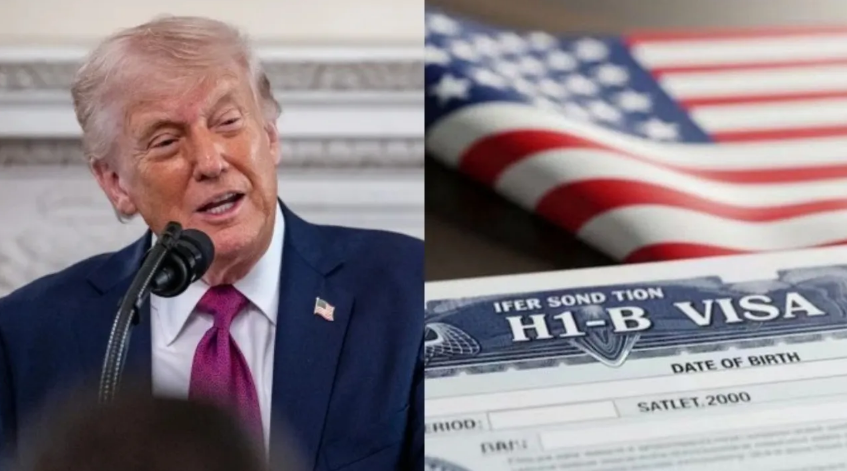
Thousands of immigrants seeking legal status in the United States have received significant relief after a federal court invalidated key immigration restrictions introduced by the administration of Donald Trump. In a landmark ruling, Rhode Island Federal Judge John McConnell held that the government’s suspension of Green Card, work permit, and citizenship applications exceeded its legal authority and could not be justified solely on national security grounds.
The court observed that applicants who had fulfilled all legal requirements, including document submission, fee payments, and biometric verification, could not be subjected to indefinite delays. The ruling is expected to benefit thousands of immigrants and asylum seekers whose applications had been placed on hold.
The restrictions originated from a 2025 shooting incident involving two National Guard members in Washington, D.C. Following the arrest of an Afghan national in connection with the case, the Trump administration expanded its travel ban policy to cover 39 countries, citing security concerns. The measures halted Green Card, employment authorization, and citizenship applications from affected countries, while also freezing asylum cases and ordering reviews of some previously approved applications.
With the court declaring four major immigration policies unlawful, the judgment is being viewed as a major reprieve for immigrants from several Asian and African nations.
Meanwhile, a separate controversy is unfolding in the U.S. Congress over the future of the H-1B visa program. Republican Congressman Chip Roy has introduced the American White-Collar Worker Jobs Act, alleging that the existing H-1B framework is being used as a pathway to permanent residency. The proposed legislation also calls for the elimination of the Optional Practical Training (OPT) program, which allows international students to work in the United States after completing their studies.
According to Roy, the four-decade-old H-1B visa system has enabled the entry of lower-cost foreign labor, limiting opportunities for American workers in science, technology, engineering, and mathematics (STEM) fields. The bill proposes replacing the current lottery-based system with a merit- and wage-based model that prioritizes American professionals. The proposal has received support from organizations including US Tech Workers and Federation for American Immigration Reform.
The proposed reforms have triggered concerns among Indian IT professionals, many of whom rely on the H-1B program for employment opportunities in the United States. Addressing these concerns, U.S. State Department spokesperson Tommy Pigott stated that American visa regulations are not aimed at any specific country, including India.
He said the current administration is focused on enforcing immigration laws uniformly and that the regulations apply equally to all nations. Pigott also acknowledged the significant contribution of Indians to the U.S. economy, highlighting their role in the growth of numerous unicorn startups.
Legal experts believe the federal court ruling represents a significant setback for the Trump administration’s restrictive immigration agenda and reinforces protections for lawful immigration channels. However, the administration is expected to challenge the verdict in higher courts, potentially setting the stage for a prolonged legal battle over U.S. immigration policy. As Congress debates major changes to the H-1B program, immigrants and technology professionals worldwide are closely monitoring developments that could reshape America’s immigration landscape.