





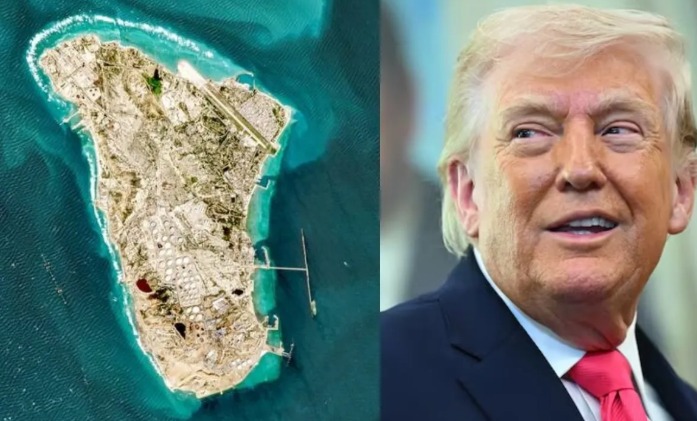
The month-long conflict in West Asia has reached a critical juncture as U.S. President Donald Trump signaled intentions to seize Iran’s primary oil export hub, Kharg Island. Speaking to the Financial Times, Trump said bringing Iranian oil under U.S. control is a top priority, drawing parallels to earlier actions in Venezuela where U.S. forces gained control over the oil sector. He emphasized that multiple options are being considered and that Kharg Island could be seized or left alone depending on the situation.
Kharg Island, situated just 16 miles off the Iranian coast, handles approximately 90% of Iran’s oil exports. Experts warn that a U.S. takeover could completely disrupt Iran’s energy trade and noted that Tehran may deploy naval mines to defend the island, creating significant risks for U.S. naval forces. In response to the escalating situation, the Pentagon is reportedly deploying around 10,000 additional troops, with 3,500 already in place, alongside thousands of Marines and paratroopers to bolster military presence in the region.
Trump expressed confidence that Iran’s defenses are currently weak, asserting that Kharg Island could be seized “easily.” He also mentioned ongoing discussions, mediated by Pakistan, to reopen the Strait of Hormuz, warning that failure to reach an agreement by April 6 could lead to additional attacks on Iran’s energy infrastructure. The president underscored that these moves aim to secure global oil trade routes and U.S. interests in the Gulf.
Amid the conflict, Trump also commented on the leadership transition in Iran. Following airstrikes that reportedly killed senior officials, including Supreme Leader Ali Khamenei, the new Supreme Leader Mojtaba Khamenei has remained largely out of public view. Trump speculated that Mojtaba might be dead or severely injured, adding uncertainty to Iran’s command structure amid the ongoing war.
Trump further addressed reports that Iran was allegedly levying tolls on ships in the Strait of Hormuz. He warned that any such move would be swiftly countered by the U.S., potentially within minutes. He also noted that regional players including Saudi Arabia, Qatar, UAE, and Bahrain have taken steps against Iran, signaling a growing alignment among Gulf nations in response to the conflict, with military and economic ramifications expected to escalate further.