





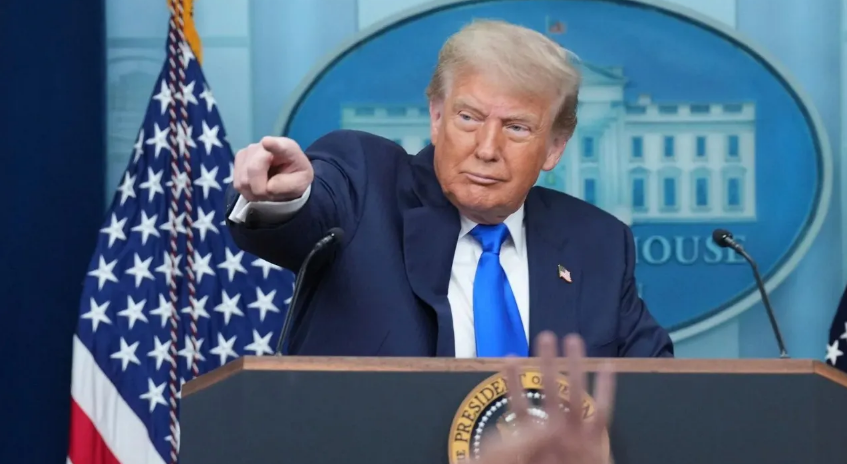
U.S. President Donald Trump has announced a significant increase in import duties on foreign goods, raising tariffs to 15 percent. The move comes just a day after he had signaled a 10 percent tariff. This escalation follows the U.S. Supreme Court’s decision to strike down his earlier tariff orders, ruling 6-3 that only Congress has the authority to impose such duties and that the President cannot act unilaterally.
Trump sharply criticized the Supreme Court verdict, describing it as anti-American and “very bad.” He also indicated through social media that he intends to use alternative legal channels to assert his authority, despite the Court’s ruling limiting his powers. The former President has long argued that tariffs can strengthen the U.S. economy and bolster the domestic manufacturing sector.
The President targeted the judges personally, expressing frustration that justices he appointed voted against him. However, he praised Justice Brett Kavanaugh, who supported his position, emphasizing the importance of judicial backing for economic measures. Trump reiterated his belief that tariffs on foreign goods can benefit U.S. industry and manufacturing.
Democrats strongly opposed Trump’s decision, warning that higher import duties will impact ordinary consumers by increasing prices and putting pressure on household budgets. Critics argued that the move resembles a “tax on the public” and could harm American citizens financially. The U.S. government has already collected more than $133 billion in revenue from previous import duties.
The new 15 percent tariff applies globally, including to India, which had previously faced different rates on specific imports such as oil. Analysts say the move could have wide-reaching effects on global trade, impacting international supply chains and commerce. Observers are closely watching how long the new tariffs will remain in effect and their implications for U.S. and global markets.