





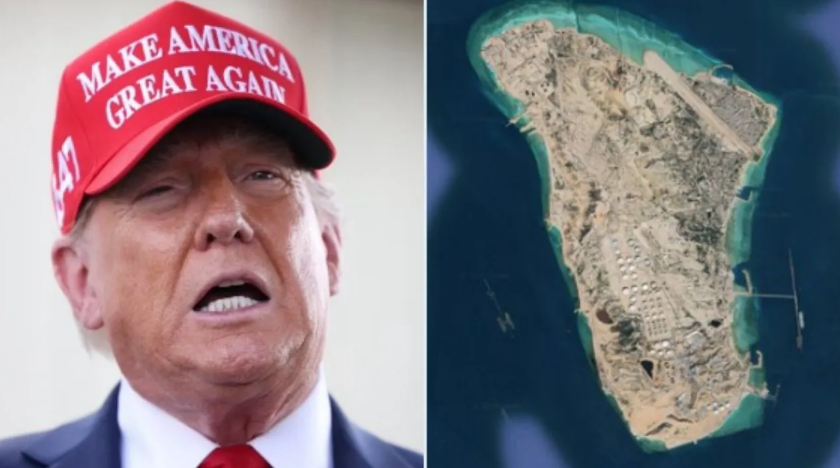
Amid the ongoing U.S.-Iran conflict, President Donald Trump has shown reluctance to directly target Iran’s critical oil facilities. While attacks conducted alongside Israel have given the U.S. a tactical advantage, Trump is reportedly wary of striking Kharg Island, a strategic hub for Iran’s oil exports. Analysts note that targeting such a site would deal a severe economic blow to Iran, yet the U.S. has so far avoided action there.
Kharg Island, located in the Persian Gulf, handles nearly 90% of Iran’s crude oil exports and has a daily loading capacity of around 7 million barrels. Any disruption here would threaten Iran’s economy and global oil supply chains. Despite the potential impact, Washington has set a ‘red line’ against attacking the island.
Experts cite multiple reasons for the U.S. restraint. A strike on Kharg Island could trigger a global oil market shock, pushing Brent crude prices well above $100 per barrel and increasing inflation risks worldwide. The destruction of this hub would also create significant supply shortages, affecting energy markets globally.
Another major concern is potential Iranian retaliation. An attack could prompt Iran to close the Strait of Hormuz, through which 20% of global oil shipments pass. There is also a risk of strikes on oil fields in neighboring countries such as Saudi Arabia and the UAE, which could escalate into a wider regional conflict.
Additionally, strategic considerations with China influence U.S. caution. Nearly 80% of Iran’s oil exports go to China, and targeting Kharg Island could spark diplomatic tensions. Analysts also note that destroying the facilities now would make post-war reconstruction and governance in Iran extremely difficult for any future administration. For the moment, the U.S. continues to focus on Iranian military and nuclear targets, though the “Kharg strategy” could be considered if the conflict intensifies.