





Even a decade after the bifurcation of united Andhra Pradesh, the issue of merging certain border villages near Bhadrachalam has resurfaced, drawing renewed attention from both the state and central authorities. There is growing demand to transfer five villages currently in Andhra Pradesh—Purushottapatnam, Atpaka, Pichikalapadu, Kannayigudem, and Gundala—back to Telangana, citing administrative, developmental, and welfare considerations.
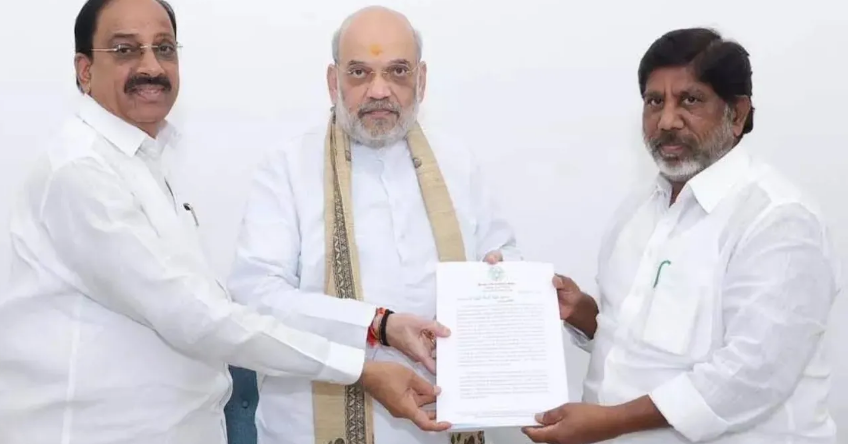
Telangana Agriculture Minister Tummala Nageswara Rao sent a formal letter to Union Home Minister Amit Shah on Sunday, urging the merger of these villages into Telangana. He emphasized that residents currently face administrative difficulties, having to travel long distances within Andhra Pradesh for basic services. The merger, he argued, would also benefit tribal communities by ensuring access to government schemes and welfare programs. Rao requested that the matter be addressed urgently through a special bill in the ongoing parliamentary session.
Simultaneously, Telangana MP Renuka Chowdhury raised the issue in the Rajya Sabha, criticizing the central government for failing to uphold bifurcation promises. She asserted that residents who should have been part of Telangana were forcibly included in Andhra Pradesh and demanded the immediate transfer of the five villages. Chowdhury also called for compensation for losses caused by delays in implementing commitments such as the Railway Coach Factory and NTPC projects under the bifurcation agreement.
The merger is considered vital for the expansion and development of Bhadrachalam town. Currently, the town faces space constraints, limiting urban growth and the development of the famous Ramalayam. Locals and officials alike stress that incorporating these five villages into the Bhadrachalam municipality is essential for effective planning, infrastructure development, and the overall welfare of residents.
With both the state minister and the parliamentarian pressing the Union government on the issue, the spotlight now turns to how the Modi administration will respond to this longstanding demand. The decision is expected to have significant implications for administrative efficiency, regional development, and the political discourse surrounding Telangana-Andhra Pradesh border areas.