





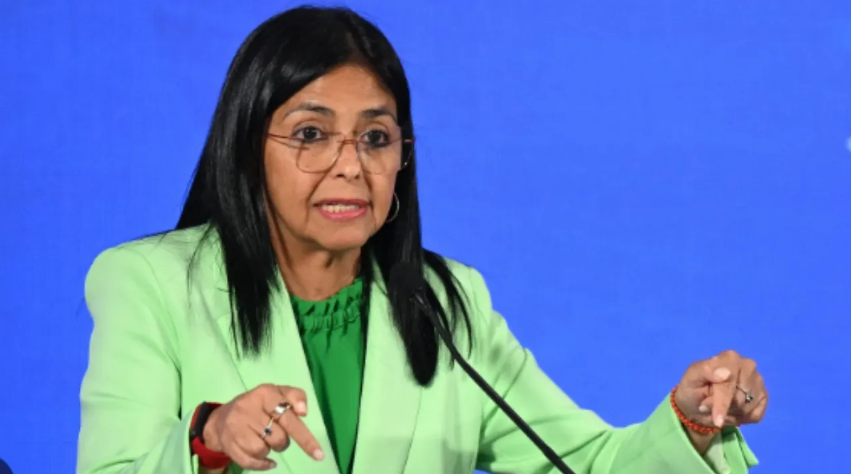
New details have emerged regarding the U.S. operation targeting Venezuela, which involved the alleged detention of former President Nicolás Maduro and his wife. A recently leaked video shows interim President Dency Rodriguez speaking over the phone about the intense challenges faced during the mission. She stated that U.S. forces gave Venezuelan officials only 15 minutes to respond to their demands, threatening severe consequences if they failed to comply. Rodriguez emphasized that maintaining her authority during the operation was her primary concern.
Rodriguez explained that the threats began immediately after Maduro was detained. She, Interior Minister Diosdado Cabello, her brother, and Minister Jorge Rodriguez were reportedly allotted only 15 minutes to respond to U.S. demands. She further noted that U.S. forces had claimed Maduro and his wife had been killed rather than arrested, adding extreme pressure on Venezuelan officials to manage the unfolding crisis. Rodriguez described the situation as “disturbing and overwhelming,” given the short timeframe and high stakes.
Eyewitness accounts from Venezuelan security guards indicate that the U.S. operation involved eight helicopters, which deployed around 20 heavily armed soldiers. The guards described a rapid and intense assault, noting that each soldier fired what appeared to be 300 rounds per minute. The weaponry was described as highly advanced and unlike anything previously seen, causing widespread chaos and injuries among local personnel.
The security guard also described the assault as producing an extraordinary sonic impact, which led to physical injuries including bleeding from the nose and disorientation. Many guards reportedly fell to the ground, unable to move, as the attack unfolded. Reports suggest that the unprecedented weapon effects may have involved super-sonic or directed-energy devices, intended to neutralize targets quickly and efficiently.
Former U.S. intelligence officials speculate that the operation may have used cutting-edge technology such as microwaves or lasers to destroy or incapacitate targets. The leak has prompted global concern over the use of experimental weaponry in foreign operations, highlighting both the intensity of the U.S. mission in Venezuela and the extreme risks faced by local personnel during high-stakes interventions.