





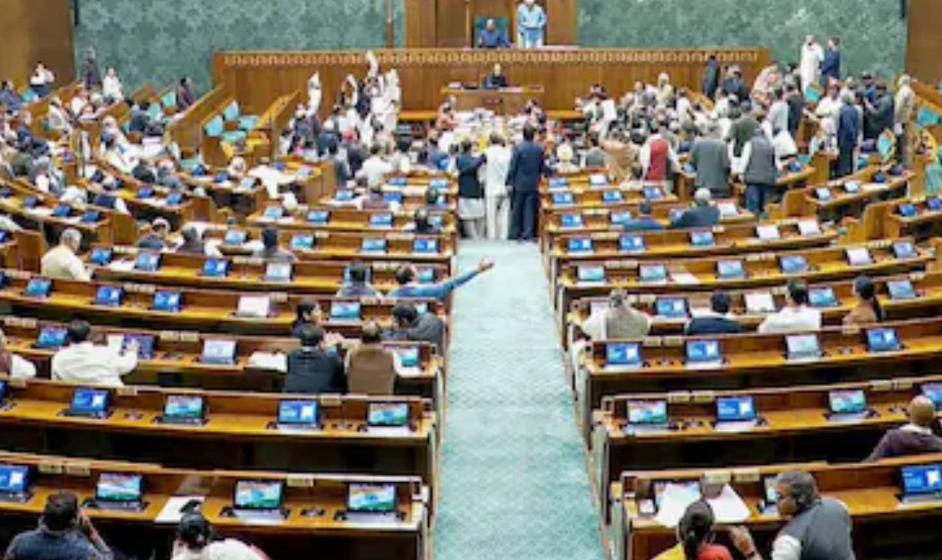
India’s Parliament will convene for its Monsoon Session from July 20 to August 13, spanning 19 sitting days, Union Parliamentary Affairs Minister Kiren Rijiju announced officially. He stated that President Droupadi Murmu has approved the government’s recommendation to summon both Houses, and expressed hope that the session would see meaningful debate on matters of national importance. Notably, this will be the first Parliament session since the Bharatiya Janata Party’s decisive victory in recent state assembly elections, a result that has visibly shifted the balance of power between the ruling and opposition benches.
With the election of new members from various states now complete, the ruling NDA coalition’s numerical strength in the Rajya Sabha has grown further in the government’s favour, while the opposition INDIA bloc’s position appears to be weakening correspondingly. Adding to the political churn, this will be the first session held after internal splits within the Trinamool Congress (TMC) and the Uddhav Thackeray-led Shiv Sena (UBT). Twenty rebel TMC MPs have decided to break away as a group and merge into a party called “NCPI,” while six MPs from the Uddhav faction have opted to merge with Chief Minister Eknath Shinde’s Shiv Sena. Lok Sabha Speaker Om Birla is yet to issue a final ruling on both groups’ request to be recognised separately within the House.
In another significant development, the three-member committee constituted to examine the removal of High Court Judge Justice Yashwant Varma — following serious corruption allegations after burnt currency bundles were found at his residence — has completed its report. Speaking in Kolkata, Speaker Birla confirmed that this inquiry report will be tabled in the Lok Sabha during the Monsoon Session, adding that further action would follow only after a comprehensive debate on the matter in the House. Notably, although Justice Varma has already tendered his resignation, the President has not yet accepted it.
The government has also lined up an ambitious legislative agenda for the session, including bills relating to corporate law, the securities market code, and central rules under the wage code, alongside several bills of national significance. Chief among them is the 131st Constitutional Amendment Bill on women’s reservation and delimitation of constituencies, which the Centre is prioritising after it failed to secure passage in earlier sessions. Also on the table is the 130th Constitutional Amendment Bill, which proposes automatic removal from office — whether for a Prime Minister, Chief Minister, or minister — for any leader facing serious criminal charges who remains in judicial custody or detention for 30 consecutive days. The government is additionally weighing the “One Nation, One Election” bill for simultaneous polls to the Lok Sabha and all state assemblies, along with the FCRA Bill, the Viksit Bharat Shiksha Adhishthan Bill, an anti-doping bill, and a new bill to replace the ordinance that increased the strength of Supreme Court judges.
The delimitation issue is expected to trigger sharp confrontation in the House, as the Centre moves to amend the law to increase Lok Sabha seats nationwide by nearly 50 percent, aiming to fully implement women’s reservation in legislatures from 2029. Regional parties, particularly from southern states, have warned that a population-based increase in seats would unfairly penalise states that have successfully implemented population control, reducing their representation. Separately, the opposition is preparing to corner Defence Minister Rajnath Singh over his earlier parliamentary statement that no Indian soldiers died during “Operation Sindoor,” a claim contradicted by the government’s own recent release of the names of soldiers killed. The Congress party has issued a notice against him alleging that he misled the House, calling it a breach of parliamentary privilege. With TMC’s internal rebellion, shifting DMK-Congress equations, and southern states’ objections to key bills all converging, this year’s Monsoon Session appears set to be an unusually heated and closely watched one.