





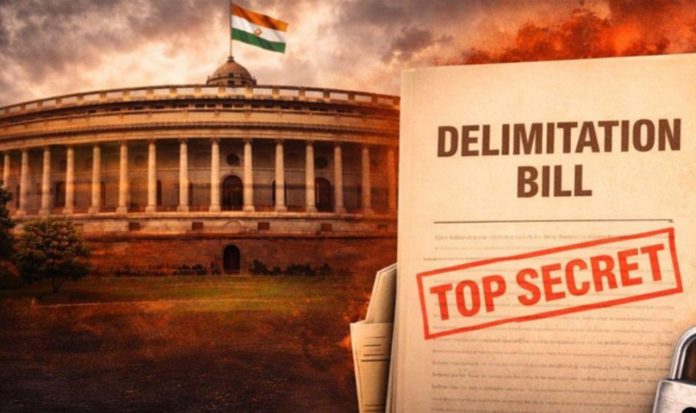
NEW DELHI: The Union Cabinet has approved bills on delimitation and the implementation of women’s reservation, reviving a proposal that failed to clear Parliament in April. The earlier Delimitation Bill, introduced in April 2026, provided for an increase in the number of Lok Sabha seats and 33 percent reservation for women. Opposition parties, particularly from the southern states, objected that redrawing constituencies on the basis of population would penalise states that had controlled population growth and leave them with a smaller share of seats.
In the Lok Sabha vote on April 17, 298 members supported the bill and 230 opposed it. Because a constitutional amendment requires a two-thirds majority of members present and voting, the bill fell short, and the Centre withdrew it.
The BJP is now reportedly preparing a revised formula. Under one proposal, the existing Lok Sabha strength of every state would be raised by 50 percent, which the Centre believes would address concerns that only more populous states stand to benefit. Another proposal under consideration would retain the current inter-state distribution of seats, based on the 1971 Census, for another 25 years. The 2011 Census data would be used only to redraw constituency boundaries within states, not to allocate seats between them. Officials have not confirmed the contents of the final bill.
To secure the numbers, the BJP is reportedly in talks with regional parties. The support of Tamil Nadu’s DMK (22 Lok Sabha MPs), the Sharad Pawar-led NCP (8) and Andhra Pradesh’s YSRCP (4) is seen as crucial. The party is also reaching out to MPs who have broken away from the Trinamool Congress, the Eknath Shinde-led Shiv Sena faction and smaller parties, with assurances that their states’ interests will be protected.
As a constitutional amendment, the bill needs a majority of the total membership of each House as well as the support of at least two-thirds of members present and voting. The BJP believes that Opposition backing, along with possible absences or abstentions during voting, would make the threshold easier to meet. The bill must pass both the Lok Sabha and the Rajya Sabha, and because it affects the representation of states, it also requires ratification by at least half of the state legislatures.
If the 50 percent increase is implemented, Andhra Pradesh’s Assembly strength is estimated to rise from 175 to 263 seats, and Telangana’s from 119 to 179. Lok Sabha seats are projected to increase from 25 to 38 in Andhra Pradesh and from 17 to 26 in Telangana. Supporters of delimitation argue that a smaller population per legislator would make representatives more accessible. The Centre also believes that the larger House would pave the way for implementing the women’s quota.
The government is reportedly aiming to complete delimitation and implement women’s reservation before the 2029 general elections. However, the passage of the bills, the constitution of a Delimitation Commission, the redrawing of constituencies and other constitutional steps must all be completed first, so it remains uncertain whether the new seats will be in place by 2029.