





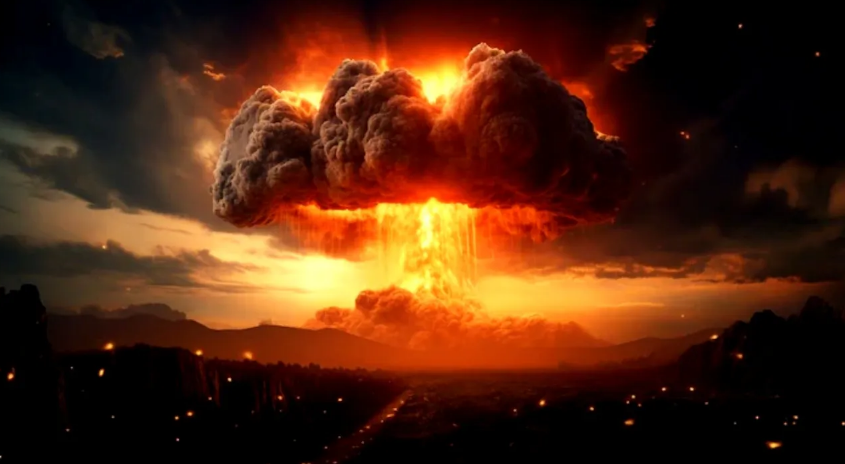
Nuclear weapons differ fundamentally from conventional explosives, as they derive their destructive power from reactions within the atomic nucleus rather than chemical processes. These weapons release immense energy when atomic bonds are either split or fused, resulting in catastrophic explosions within seconds.
Nuclear bombs primarily function through two mechanisms—nuclear fission and nuclear fusion. In fission, heavy elements such as uranium or plutonium are bombarded with neutrons, causing their nuclei to split and trigger a rapid chain reaction. This process was used in the atomic bombings of Hiroshima and Nagasaki during World War II. In contrast, nuclear fusion involves the merging of lighter elements like hydrogen under extremely high temperatures, producing significantly greater energy. Fusion-based weapons, commonly known as hydrogen bombs, are far more powerful and typically use a fission reaction as a trigger.
The destructive impact of nuclear weapons extends beyond the initial blast. They generate intense heat capable of incinerating entire regions instantly, powerful shockwaves that can level structures over vast distances, and long-lasting radioactive fallout. This radiation poses severe health risks, including cancer and genetic mutations, making nuclear weapons among the most devastating ever developed.
Despite their destructive nature, nuclear weapons remain in the arsenals of several nations, including the United States, Russia, China, India, and Pakistan. However, global efforts have been made to limit their use through international agreements, recognizing the catastrophic humanitarian and environmental consequences. At the same time, nuclear technology continues to play a vital role in peaceful applications such as power generation and medical treatments, particularly in cancer care.