





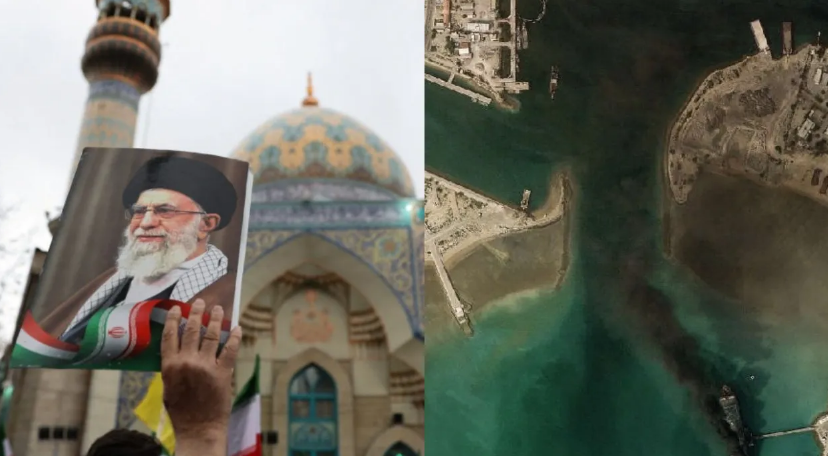
Tensions across West Asia are intensifying by the day as the conflict between the United States, Israel and Iran deepens. While Washington and Tel Aviv continue their coordinated strikes on Iranian targets, Tehran has stepped up retaliatory attacks on American military bases stationed in Gulf countries, significantly escalating the regional security crisis.
In a major development, Iran has officially announced the closure of the Strait of Hormuz, a move that has sent shockwaves through global markets. Tehran warned that any vessel attempting to cross the strategic waterway would be targeted and set ablaze. It further stated that the Islamic Revolutionary Guard Corps (IRGC) and Iranian naval forces would strictly enforce the blockade.
The Strait of Hormuz is considered one of the world’s most critical energy corridors, with nearly 20 percent of global oil supplies passing through it. India alone sources around 50 percent of its crude oil imports via this route. Analysts warn that shutting down the passage could sharply increase transportation and insurance costs, triggering a surge in international crude prices. Early signs of volatility are already visible in global markets.
The escalation follows joint US-Israel strikes that reportedly killed Iran’s Supreme Leader Ayatollah Ali Khamenei, along with several members of his family and more than 40 senior officials. Vowing strong retaliation, Iran has intensified attacks on American airbases and diplomatic missions in Gulf nations, further heightening fears of a prolonged and wider conflict across the Middle East.