





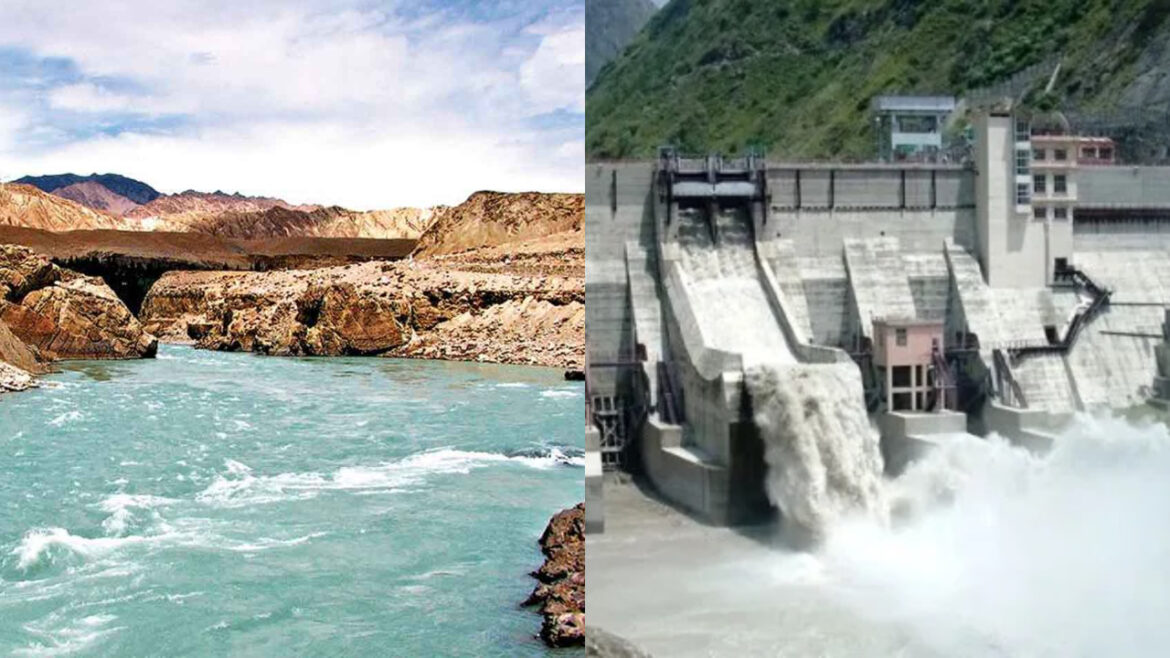
India has firmly ruled out reviving the Indus Waters Treaty in its current form, stating that any future restoration of the six-decade-old water-sharing pact with Pakistan must include fundamental changes. Following the Pahalgam terror attack, India launched Operation Sindoor against Pakistan and suspended the treaty, signed in 1960 under World Bank mediation. Government sources said the treaty’s revival, or any new water-sharing framework, will depend entirely on whether Pakistan abandons cross-border terrorism.
Officials clarified that India is not currently planning a complete withdrawal from the treaty. However, they warned that as a sovereign nation, India retains the right to unilaterally terminate any international agreement that no longer serves its national interests. New Delhi stated that circumstances from 1960, including geography, climate, and population, have changed dramatically, necessitating a review of the treaty’s terms to meet Jammu and Kashmir’s development needs and rising energy demands amid climate change.
India strongly rejected Pakistan’s claims that the treaty’s suspension has caused severe water shortages within its borders. Officials accused Islamabad of shifting blame to New Delhi to cover up its own internal failures, citing insufficient dams, inadequate water storage capacity, major leakages, and unresolved water disputes among Pakistan’s provinces as the actual causes of the crisis.
Separately, India accused Pakistan of taking no credible action against terrorism, noting that UN-designated terrorists and banned organizations continue to operate openly on Pakistani soil, with continued militant movement reported along the Line of Control. India also objected to Pakistan raising repeated concerns over Indian hydropower projects on the Kishanganga, Ratle, Baglihar, Salal, and Pakal Dul projects on the western rivers, accusing Islamabad of misusing the treaty’s dispute resolution clauses and seeking international arbitration to delay development work.
India reiterated that terrorism and dialogue cannot go hand in hand, warning that any diversion or increased storage of western river waters could severely damage Pakistan’s agriculture and food security, given the Indus basin supplies nearly 80 percent of the country’s drinking water needs. New Delhi declared it will not bow to pressure on matters of national interest and citizen safety, adding that Pakistan’s conduct alone will determine whether the treaty is normalized or scrapped entirely.