





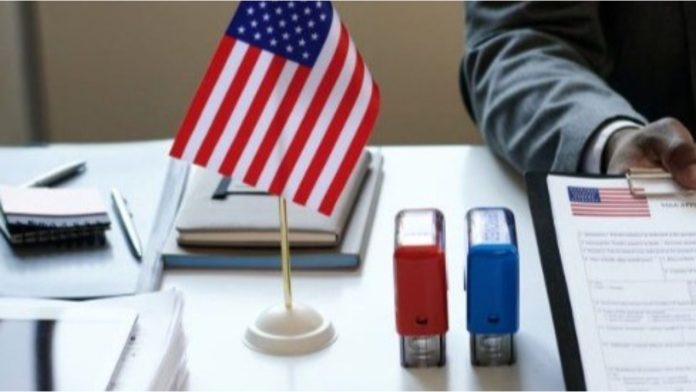
The United States government has issued a significant policy shift affecting tourists and business travelers seeking to visit the country. The US State Department has issued orders expanding a new requirement mandating citizens of as many as 50 countries to submit a visa bond when applying for B1/B2 temporary visitor visas. India, however, has been granted a full exemption from this stringent list. In contrast, neighboring South Asian nations including Bangladesh, Nepal, and Bhutan, along with numerous countries across Africa, the Caribbean, Central Asia, and the Pacific region, now fall within the scope of the rule.
A visa bond functions as a form of security deposit, introduced by the US government to deter foreign nationals entering the country on temporary business (B1) or tourist (B2) visas from unlawfully remaining in the US after their visa period expires. Citizens from the 50 listed countries will be required to deposit a specified sum as a bond in order to obtain a visa. During the visa interview process, a consular officer will determine the bond amount for each traveler, set at either $10,000 (approximately Rs. 8.3 lakh), $15,000 (approximately Rs. 12.5 lakh), or $20,000 (approximately Rs. 16.7 lakh). The full bonded amount is refunded provided the traveler adheres strictly to visa conditions and returns to their home country within the permitted timeframe; however, should they overstay and remain in the US unlawfully, the bond amount will be permanently forfeited to the US government.
The list of 50 countries was compiled using entry and exit data provided by the Department of Homeland Security, identifying nations whose citizens have the highest rates of visa overstays. Applicants subject to the rule are required to submit DHS Form I-352, with payments processed exclusively through the US Treasury Department’s online platform, Pay.gov. Applicants are advised against making any advance payment until explicitly instructed to do so by a consular officer. Notably, the bond payment may be made not only by the applicant but also by relatives, friends, or business associates on their behalf, though submission of the bond does not guarantee visa approval.
Travelers who enter the US after posting a visa bond will also be subject to specific restrictions, including a requirement to use only official commercial airports equipped with Customs and Border Protection Preclearance facilities. Entry or exit via charter flights, private aircraft, land borders, or sea ports will not be permitted under this category. Any violation of bond conditions will be reported to US Citizenship and Immigration Services, which may pursue legal action against the individual concerned.
Regarding India’s exemption, officials noted that millions of Indian tourists, professionals, and business travelers visit the United States annually, with the vast majority adhering closely to visa regulations and deadlines. Citing a comparatively low overstay rate among Indian nationals, the US government confirmed that Indian passport holders have been excluded from the new visa bond requirement.