





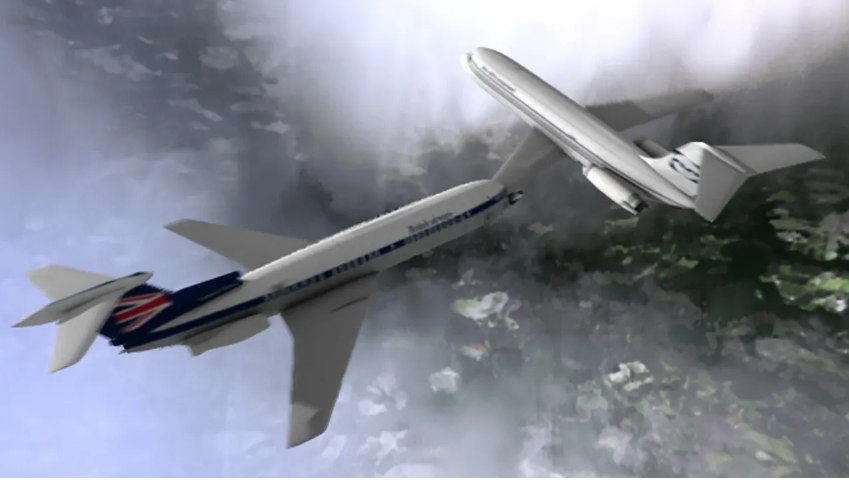
Mid-air collisions, though rare, have historically caused catastrophic loss of life. One of the most devastating incidents occurred on November 12, 1996, when two aircraft — a Saudi Arabian Airlines flight from Delhi and a Kazakhstan Airlines flight — collided over Haryana, killing 349 passengers. Similar incidents were reported earlier in the United States, Germany and Russia. However, advancements in aviation technology have drastically reduced such accidents, significantly improving air-travel safety.
To prevent collisions, pilots strictly follow airborne navigation protocols and undergo training in radar-assisted and radar-free flight systems. Modern aircraft no longer rely on visual monitoring from cockpit windows. Traffic near airports is tracked through Standard Instrument Departure (SID) and Standard Terminal Arrival Route (STAR) systems, which provide constant updates on aircraft movement. If landing or take-off conditions are not favourable, pilots are notified immediately and asked to remain airborne until clearance is granted.
Vertical and horizontal separation standards play a crucial role in avoiding collisions. Aircraft below 29,000 feet must maintain a vertical gap of 1,000 feet, while aircraft above this altitude require a 2,000-foot gap. Flights operating beyond 45,000 feet maintain a 4,000-foot separation. Under Reduced Vertical Separation Minima (RVSM), modern jets can fly with just 1,000-foot separation at 29,000–41,000 feet to conserve fuel. Horizontal separation is ensured using distance in radar-covered regions and time intervals in radar-free areas. Aircraft departing the same route maintain a gap of 5–9 kilometres in radar zones and 10–15 minutes in non-radar areas. The North–South rule prevents head-on encounters by assigning directional flight paths: 0°–179° for north-to-south and 180°–359° for south-to-north travel.
Air Traffic Control (ATC) systems oversee aerial safety through continuous radar monitoring. Aircraft operating at around 10,000 feet must adhere to a speed threshold of 463 km/h. In case of potential mid-air conflict, the Traffic Alert and Collision Avoidance System (TCAS) — installed on all commercial aircraft — issues automatic commands to pilots, instructing one aircraft to climb and the other to descend. This system detects danger in advance and has become a mandatory safety protocol across global aviation.