





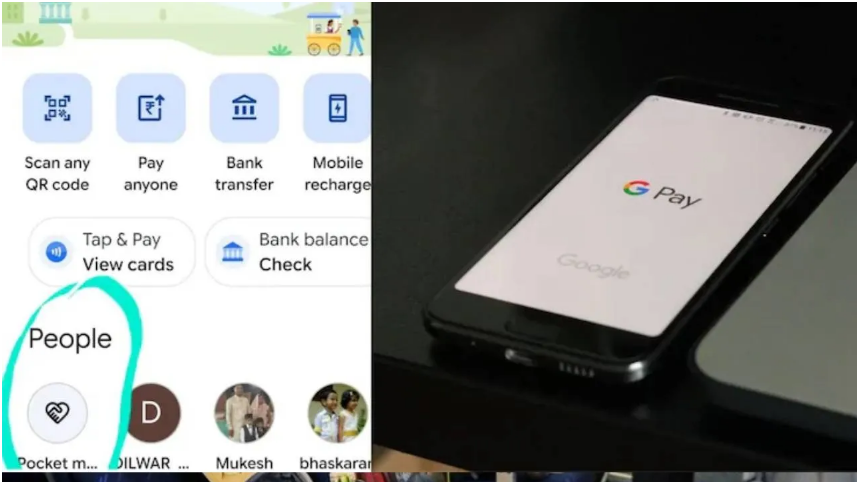
The newly introduced ‘Pocket Money’ feature on Google Pay has become a subject of widespread discussion on social media, with misleading claims circulating on platforms such as WhatsApp and X (formerly Twitter). Some posts allege that the feature automatically deducts money from users’ bank accounts and label it as a scam. However, these claims are false, and the feature is an official offering designed for controlled payments.
Google Pay’s ‘Pocket Money’ or ‘UPI Circle’ feature is intended to help users extend limited payment access to trusted family members, particularly children or dependents who do not have individual bank accounts. It allows a primary account holder to link their account and authorize selected users to make transactions within set boundaries.
Contrary to viral misinformation, simply clicking on the ‘Pocket Money’ icon does not result in any deduction of funds. The system is built with multiple security layers, and no transaction can take place without the explicit consent and authorization of the primary account holder. Users must manually approve and connect trusted individuals before enabling access.
The feature operates in two modes: a predefined spending limit mode, where users can set a monthly cap of up to ₹15,000, and an approval-based mode, where every transaction requires real-time confirmation from the account holder. In both cases, payments are executed only after proper authorization, ensuring user control remains intact at all times.
To activate the service, users must verify the recipient using a phone number or QR code, confirm identity details, and complete the setup using their UPI PIN. Financial experts advise users not to fall for unverified social media claims and emphasize that the feature is secure when used responsibly with trusted contacts such as close family members.