





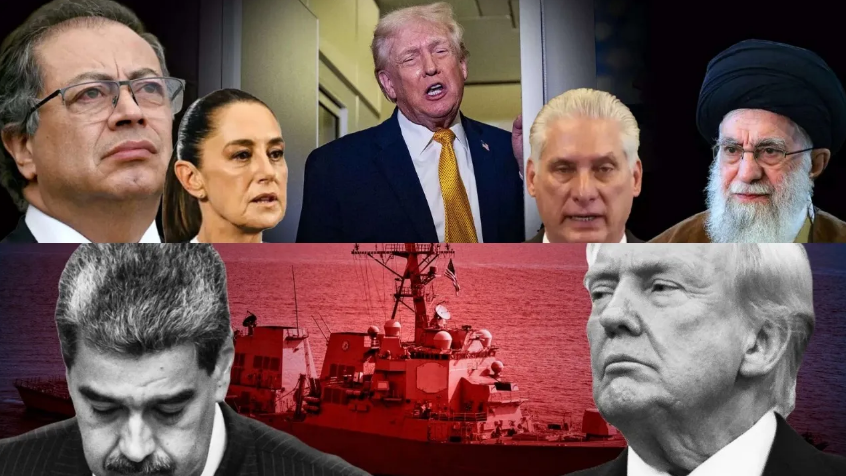
Following the detention of Venezuelan President Nicolás Maduro, international attention has shifted to speculation over potential next targets of U.S. President Donald Trump’s foreign policy strategy. Analysts suggest that Cuba, Colombia, Mexico, Iran and Greenland could face increased pressure from Washington, driven by a mix of security, political and economic considerations.
Cuba is viewed as a likely focus due to its deep ties with the Maduro regime and its worsening economic crisis after the loss of Venezuelan support. The U.S. believes Cuban security and intelligence networks played a key role in sustaining Maduro’s rule, and dismantling these structures is seen as a priority. Domestic U.S. politics, particularly Cuban-American voter sentiment in Florida, are also believed to influence this stance.
Relations with Colombia and Mexico have also come under strain. Washington has accused Colombia of failing to curb cocaine production and has criticized its left-leaning leadership for opposing U.S. actions in Venezuela. Mexico, meanwhile, is facing strong U.S. criticism over illegal immigration, fentanyl trafficking and the growing power of drug cartels, with Trump signaling that unilateral action could be taken if U.S. security interests are threatened.
Beyond the Americas, Iran and Greenland are also in focus. The U.S. has warned Iran against rebuilding its nuclear program following earlier strikes and is monitoring allegations of weapons sales through cryptocurrency channels. Greenland, strategically located in the Arctic, is seen as crucial to counter Russian and Chinese influence, particularly due to its rare earth mineral reserves and strategic military importance, adding a new dimension to geopolitical tensions.