




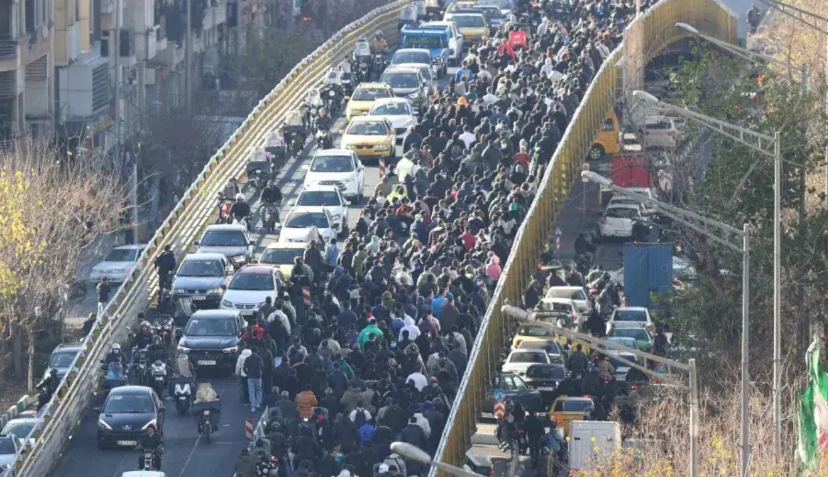
Tehran: Gen Z–led protests are intensifying in Iran, mirroring recent youth-driven uprisings in Sri Lanka, Bangladesh, and Nepal that resulted in political change. Triggered by soaring inflation and a sharp fall in the national currency, demonstrations that began in the capital Tehran have now spread nationwide. Iran has witnessed continuous protests over the past four days, forcing the resignation of the Central Bank Governor amid mounting economic pressure.
Police have used tear gas in several locations to disperse protesters, with visuals widely circulating on social media. Despite the government’s attempt to initiate dialogue, the unrest has continued, with students from at least 10 universities participating. Protesters have raised slogans against Supreme Leader Ayatollah Khamenei and demanded severe punishment for authoritarian rule.
Iran’s inflation rate has surged to nearly 40 percent, drastically increasing the cost of essential commodities. As of Wednesday, the value of one US dollar stood at around 1.38 million rials, compared to 430,000 rials in 2022. In 2015, the exchange rate was just 32,000 rials per dollar, underscoring the steep economic decline. An average Iranian earns about $100 a month, barely sufficient to cover food and basic necessities. Heavy reliance on imports, coupled with Western sanctions and restrictions on oil exports, has further aggravated the crisis.
The situation has worsened following the government’s decision to raise taxes by 62 percent in the 2026 budget while projecting inflation at 50 percent, drawing sharp criticism from the public. Shortages of food, medicines, drinking water, and frequent power disruptions are affecting not only the poor but also the urban middle class.
Iranian authorities have warned that strict action will be taken if protests disrupt law and order. Prosecutor General Mohammad Mohahedi Azad stated that peaceful protests would be allowed, but security agencies would intervene if public safety is threatened. Meanwhile, government officials have alleged the involvement of foreign intelligence agencies in fueling the unrest.
Political uncertainty has also grown amid questions over leadership succession, as Supreme Leader Khamenei, aged 86, is reportedly facing health issues. Analysts remain divided on whether the protests could weaken his hold on power, citing strong backing from Iran’s security and religious institutions despite growing public discontent.