





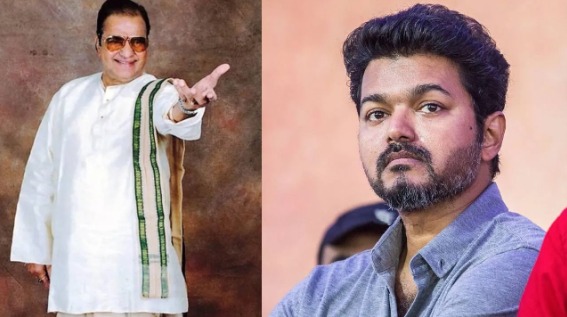
In a striking political parallel across two different eras and states, actor-turned-politicians Nandamuri Taraka Rama Rao (NTR) and Tamil actor Vijay are being compared for their rapid rise from cinema to electoral prominence. Political observers note that both leaders transformed film popularity into mass political support within a short span, reshaping regional political landscapes in Andhra Pradesh and Tamil Nadu respectively.
NTR, who founded the Telugu Desam Party in 1982, achieved a historic victory within nine months, breaking the long-standing dominance of the Congress party in Andhra Pradesh. In the 1983 elections, he secured a landslide mandate and became Chief Minister, marking a significant shift in regional politics rooted in Telugu identity and pride. His campaign, built on direct public engagement, became a defining moment in Indian political history.
Decades later, Vijay entered politics by launching Tamilaga Vettri Kazhagam (TVK) in February 2024. Within a short span of nearly two years, the party has reportedly emerged as a major force in Tamil Nadu politics, crossing the 100-seat mark in current trends and challenging the traditional DMK–AIADMK duopoly. Analysts say this marks one of the fastest political rises for a new regional party in recent times.
Both leaders are also being compared for their independent political strategies. NTR famously toured Andhra Pradesh on his “Chaitanya Ratham” without relying on alliances, while Vijay has similarly contested independently, avoiding major political coalitions. In both cases, a strong personal brand and mass appeal played a central role in mobilizing voter support outside established political structures.
Political parallels extend further to voter behavior and campaign impact. NTR drew strong backing from women and anti-incumbency sentiment, while Vijay is reportedly gaining significant support from youth and women voters seeking change. Just as NTR’s welfare initiatives like subsidized rice schemes became landmark policies, Vijay’s manifesto promises are also resonating with voters, reinforcing comparisons between two cinematic figures who turned into influential political forces in their respective eras.