





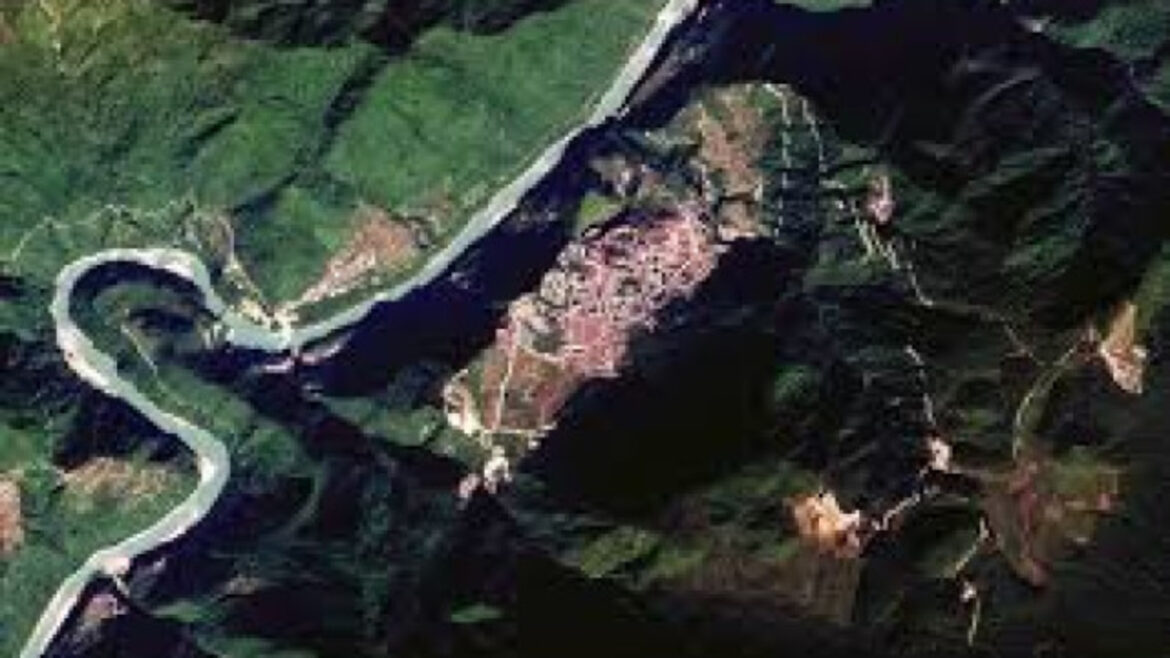
China’s ambitious mega-dam project on the Yarlung Tsangpo river in Tibet — known as the Brahmaputra once it enters India — has run into an unexpected obstacle. While Beijing has pressed ahead with the project despite sustained international objections, it is now facing scrutiny from its own domestic geologists. Chinese geological scientists have submitted reports raising serious safety concerns about the massive hydropower project, which is being built at a cost of approximately 147 billion dollars (over ₹14 lakh crore).
A recent geological study conducted under the supervision of the China Geological Survey, a state-run agency, has revealed a significant finding. Scientists have identified that the highly active and dangerous Paizhen Fault line runs directly beneath the area where the mega-dam is being constructed. Such fractures or fault lines in underground rock layers are known to become epicenters of severe earthquakes. The report noted that this active geological fault line poses a risk of disastrous conditions arising in the areas surrounding the dam at any time.
According to the researchers, the Paizhen Fault did not form overnight — it has been continuously active since the Pleistocene epoch, the Ice Age. This sustained underground movement has gradually weakened the rocks and hills surrounding the dam site, causing them to lose their natural cohesion. Experts warn that this has not only compromised the strength of the dam’s foundation but also poses a serious threat to the long-term structural stability of the project.
The most concerning aspect of the report is what could happen once the dam is completed and the reservoir is filled with a massive volume of water. The report warns that the immense water pressure generated when the reservoir is filled could severely affect the already-weakened underground rock layers. If this artificial pressure combines with movement along the Paizhen Fault, there is a risk of reservoir-triggered seismicity — where the large hills on either side of the reservoir could suddenly collapse into the water.
Geographically, this Himalayan region falls within Seismic Zone 5, one of the most hazardous earthquake zones in the world, where the Indian and Eurasian tectonic plates are in constant collision. Nature has demonstrated its force in this region before — researchers point to the magnitude-6.9 earthquake that struck the Nyingchi (Mainling) area of Tibet in 2017 as living evidence of the underground instability in this region. Scientists believe that constructing the world’s largest dam in such a severe earthquake zone amounts to inviting a major disaster.
China has traditionally taken great pride in its technological and engineering prowess. The dam has been designed to generate nearly three times the electricity output of China’s renowned Three Gorges Dam — approximately 300 billion kilowatt-hours — as a symbol of the country’s strategic strength. However, with China’s own scientists now openly questioning the project’s safety, rather than criticism coming solely from other nations, the engineering capability China takes pride in has become a subject of ridicule on the world stage. Alongside this, the massive ₹14 lakh crore investment from China’s treasury now appears at risk of going to waste.
This report from geologists holds particular significance for India, which lies downstream. The Yarlung Tsangpo, which flows through Tibet, enters India through Arunachal Pradesh and becomes the Brahmaputra river. India has consistently raised concerns on international platforms that China’s construction of a massive dam and its control over the river’s flow could undermine water security and ecological balance in Northeast India. In light of the seismic risks now revealed, the legitimacy of India’s concerns has become clear to the world.
Against the backdrop of these findings, experts warn that if a severe earthquake were to occur in the future and cause the mega-dam to fail, it could trigger one of the largest floods in human history. A sudden dam breach releasing lakhs of cusecs of water downstream could result in catastrophic flooding across India’s Arunachal Pradesh and Assam, as well as the neighboring country of Bangladesh. In light of this, environmental and geological experts are demanding that China abandon its rigid stance and reconsider the ₹14 lakh crore project.